







Smart ring at the gym: lifting, grip and how to protect it
Which gym exercises are fine with a smart ring on, which call for a protector, when to take it off, and how to use your morning readiness score to plan heavy days.

In this article
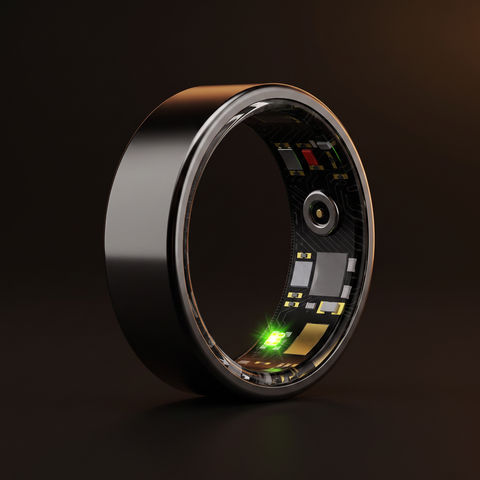
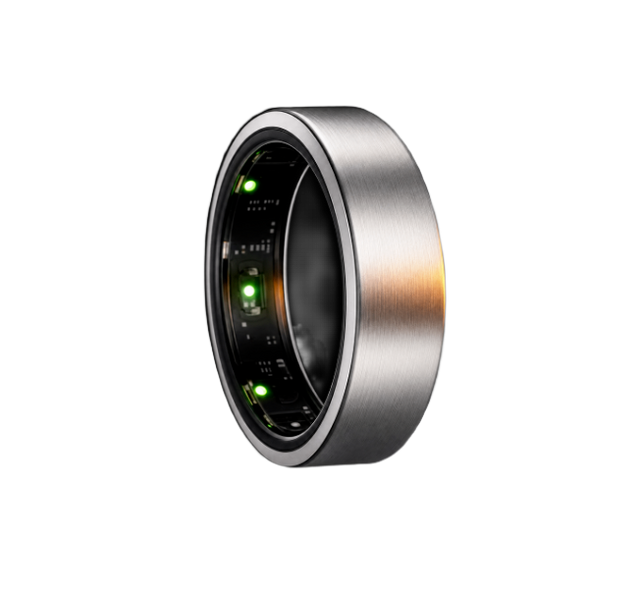
Yes, you can wear a smart ring at the gym. For cardio, machines and most bodyweight work it can stay on as it is. Barbells, dumbbells, kettlebells and pull-up bars are different, because your palm grips hard metal. Cover the ring with a silicone protector or take it off. Remove it for climbing, rope work and anything that could snag it.
This guide covers which exercises put a ring at risk and how grip affects comfort and tracking. It also covers swelling, and how to use your data to plan training.
Key takeaways
- The problem zone is grip. A ring sits exactly where a bar or handle rests across the base of your fingers.
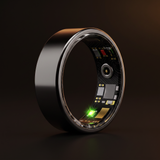
- A slim silicone protector stops metal-on-metal scratching and eases pressure. PulseRing Pro keeps tracking through the PulseRing Protector.
- Take rings off for climbing, ropes and anything that could catch. Ring avulsion is rare but serious.
- Heart rate during heavy sets is harder for any optical wearable to read. Your overnight data and morning readiness score matter more than one reading mid-lift.
- Hands swell during exercise. A ring that fits snugly at rest may feel tight mid-session.
Can you wear a smart ring while lifting weights?
You can, but it helps to understand what happens under the bar. In most grips, a barbell, dumbbell or kettlebell handle sits across the palm and the base of the fingers. That is exactly where a ring sits. Under load, the bar presses the ring into your finger on one side and into the handle on the other.
That causes three problems:
- Pinching: the ring presses into the skin between it and the bar, which is uncomfortable on heavy pulls.
- Scratching: knurled steel against titanium will scuff the finish over time. Titanium is tough, but it is not scratch-proof.
- Grip: a ring can change how the bar sits in your hand, which some lifters notice on deadlifts and heavy rows.
None of these is a reason to leave your ring at home. They are reasons to plan around it.
Which gym exercises are safe with a smart ring?
Here is a practical guide by type of training. It assumes you wear the ring at the base of your finger, which is where it sits on most people.
| Training | What happens to the ring | What to do |
|---|---|---|
| Running, treadmill, cross-trainer, spin bike | Light contact at most | Leave it on |
| Rowing machine | Handle rests across the fingers for the whole session | Protector, or move the ring to a finger clear of the handle |
| Barbell lifts (deadlift, row, clean, bench) | Direct pressure and scratching from knurled steel | Protector or remove |
| Dumbbells and kettlebells | Handle presses on the ring; kettlebell handles also rotate in the hand | Protector or remove |
| Pull-ups, chin-ups, hanging work | Full body weight through the fingers onto the ring | Protector or remove |
| Resistance machines | Depends on the handle; some grips press on the ring | Leave on, add a protector if it pinches |
| Push-ups, planks, burpees | Ring can press on the floor if your fingers spread | Usually fine; flatten your hand or use a protector |
| Climbing, bouldering, ropes, battle ropes | Risk of the ring catching on holds or rope | Take it off |
| Swimming | No grip issues | Leave it on (PulseRing Pro is rated 5ATM) |
If you train mostly with free weights, you do not need to choose between wearing the ring and lifting comfortably. A protector for lifting days and bare titanium the rest of the time covers most people.
Is it dangerous to wear a ring at the gym?
For most gym training, the risk is to the ring's finish, not your finger. The exception is anything where a ring can snag while your body keeps moving.
Cleveland Clinic describes ring avulsion as an injury where a ring is caught and pulled with sudden force. It notes these are serious injuries that frequently lead to amputation. It is rare. The usual causes are workplace accidents, falls and sports. So climbing, bouldering, rope work and some machines are worth extra care. Cleveland Clinic advises taking rings off before any activity where your fingers could get caught or pulled. It also notes that silicone rings tear more easily than metal ones.
Fit matters too. The same Cleveland Clinic page points out that a looser ring has more room to get caught. That is one more reason to get your size right; our smart ring sizing guide explains how.
A simple rule: if a hold, rope, hook or machine part could get behind the ring, the ring comes off.
Why does my ring feel tighter when I train?
Because your hands swell during exercise. Your body sends blood to the skin to release heat. The blood vessels in your hands may also open wider. Mayo Clinic explains that both can make your hands swell. It calls hand swelling during exercise common. Its first tip is to take off your rings and loosen your watchband before exercise.
You do not have to remove a smart ring for every session, but you should notice how it feels. A ring that is snug at rest can feel tight halfway through a hot class or a long session. If you see a deep dent, feel tingling, or cannot turn the ring, take it off. Let your hands settle.
Mayo Clinic also notes that swollen hands in high-level athletes can occasionally be a sign of low blood sodium. Look out for symptoms such as confusion and vomiting alongside it. That needs urgent medical care, though it is uncommon in normal gym training.
Does a smart ring track heart rate accurately during weightlifting?
Any optical heart rate sensor, on wrist or finger, struggles more during heavy lifting than during steady cardio. Optical sensors read changes in light reflected by blood flow. Hard gripping can squeeze the tissue around the sensor, and sudden movement can shift the sensor against the skin. Both add noise to the signal.
The research on wrist-worn devices shows this. A 2018 study in Medicine and Science in Sports and Exercise tested this. Boudreaux and colleagues compared several wearables with an electrocardiogram during cycling and resistance exercise. They found that as exercise intensity increased, heart rate was increasingly underestimated across all devices. They advised caution when using wearables to monitor responses to exercise. A 2020 systematic review of 158 publications found lab heart rate accuracy was reasonable overall. It varied by manufacturer and device type, though.
What this means in practice:
- Treat the heart rate you see during a heavy set as a rough guide, not a precise number.
- If you need beat-by-beat heart rate for lifting, a chest strap is the standard tool. In the same 2018 study, the chest strap tested was valid in both cycling and resistance exercise.
- The data a smart ring is best placed to collect is the overnight data, when your hand is still. That is where resting heart rate, HRV and sleep come from. Your morning readiness score is built on it.
Neither study included a smart ring. PulseRing Pro's HRV, blood oxygen and sleep stage readings have not been independently validated either. Read them as trends against your own baseline, not as exact values.
Our guide to what a smart ring is and how it works explains how ring sensors read your pulse.
How do I protect my smart ring at the gym?
Use a silicone protector
A protector is a slim silicone sleeve that slides over the ring. It stops the bar touching the titanium and softens the pressure on your finger. It comes off in seconds after your session.
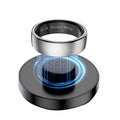
The PulseRing Protector is a slim silicone sleeve that fits over PulseRing Pro for lifting, DIY and other grip-heavy jobs. Tracking carries on through it, so your session still counts. It comes in two fits, for ring sizes 5 to 10 and 11 to 15, and costs £9.99.
Move the ring to a different finger
Some lifters move the ring to a finger that takes less of the bar. One example is moving it from the index finger to the ring finger. This only works if the ring fits that finger properly. It will not help on grips that load every finger. Our guide to which finger to wear a smart ring on covers the options.
Take it off and keep it safe
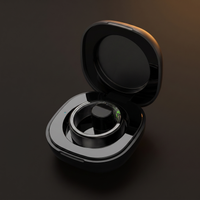
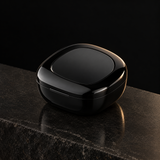
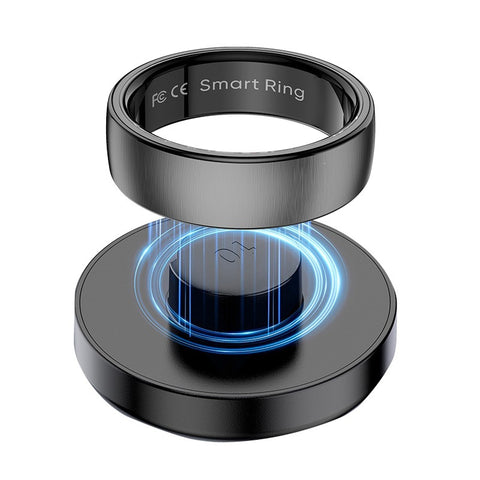
If you remove the ring, put it somewhere it cannot roll away: a zipped pocket, your locker, or its charging case. Gym floors, rubber matting and changing room drains are where small objects disappear. Take it off for a heavy session and put it straight back on afterwards. You still get your overnight data, which feeds your readiness score.
Clean it after sessions
Chalk, sweat and dust build up on the inside of a ring. Rinse it under the tap and wipe the inner surface with a soft cloth. Dry your finger before you put it back on. PulseRing Pro is rated 5ATM (50 metres), so rinsing and showering are fine.
How can a smart ring help your gym training?
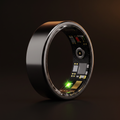
The most useful thing a smart ring does for lifters happens outside the gym. Every morning, PulseRing Pro gives you one readiness score and one plain sentence: push, maintain or rest. It builds this from your heart rate, HRV, blood oxygen and sleep, compared with your own baseline. That baseline forms over roughly two weeks of wear. Our guide to readiness scores explains how these scores work.
That helps you make one decision well: whether today is the day for your heaviest session. The NHS recommends strengthening activities that work all the major muscle groups on at least 2 days a week. Within that, you have freedom over which days you push hard. A few ways to use your score:
- Push: a good day for heavy compound lifts or a test of your top sets.
- Maintain: train as planned, but skip the extra sets and personal-best attempts.
- Rest: swap in mobility work, a walk or an easy session, and aim for an early night.
The score is a prompt, not an order. If you feel awful on a push day or great on a rest day, your own judgement still counts. Over weeks, the score gives you a consistent way to decide when to push instead of guessing each morning.
Want everything in one box? The Peak Starter Kit includes PulseRing Pro, the charging case and the protector for £99.
Frequently asked questions
Should I take my smart ring off at the gym?
Not always. For cardio machines, running, cycling and most bodyweight work, you can leave it on. For barbells, dumbbells, kettlebells and pull-up bars, use a silicone protector or take it off to avoid scratches and pinching. Always remove it for climbing, rope work or anything where the ring could catch.
Will lifting weights scratch a titanium smart ring?
It can. Titanium is tough, but knurled steel bars and kettlebell handles will scuff the finish over time, especially on heavy pulls. A slim silicone protector over the ring stops metal touching metal. Moving the ring to a finger that takes less of the bar can help, if it fits well.
Does a smart ring track workouts accurately?
Optical heart rate is harder to read during heavy lifting because tight gripping and sudden movement disturb the signal. Research on wrist wearables found heart rate was increasingly underestimated at higher intensities. Use in-session numbers as a rough guide. A smart ring's strongest data comes overnight, when your hand is still.
Can I wear my smart ring with a protector and still track?
Yes, with PulseRing Pro. The PulseRing Protector is a slim silicone sleeve that fits over the ring, and tracking carries on through it. It costs £9.99 and comes in two fits, for ring sizes 5 to 10 and 11 to 15. Slide it off after your session to go back to bare titanium.
Why does my ring feel tight after a workout?
Hands commonly swell during exercise as blood moves to the skin to release heat. A ring that fits at rest can feel tight mid-session. If you notice a deep dent, tingling or cannot turn the ring, take it off and let your hands settle. If swelling does not go away, or you are worried, speak to your GP.
Sources
- Ring avulsion, Cleveland Clinic
- Hand swelling during exercise: a concern?, Mayo Clinic
- Boudreaux BD et al. Validity of wearable activity monitors during cycling and resistance exercise, Medicine and Science in Sports and Exercise, 2018
- Fuller D et al. Reliability and validity of commercially available wearable devices for measuring steps, energy expenditure, and heart rate: systematic review, JMIR mHealth and uHealth, 2020
- Physical activity guidelines for adults aged 19 to 64, NHS
This article is for general information and is not medical advice. PulseRing Pro is a wellness device, not a medical device, and does not diagnose or treat any condition. If you are worried about your health, speak to your GP or a qualified clinician.

WHOOP alternatives with no subscription: rings and bands compared
The main WHOOP alternatives without a membership, from a one-off smart ring to screenless bands, compared with WHOOP on cost, comfort, sleep, recovery and training.

Oura Ring subscription cost UK: membership over 1 year to 5 years
Oura Membership, Oura's name for its subscription, costs £5.99 a month or £69.99 a year in the UK. What it pays for, what the ring does without it, and the full cost over one to...

Oura Ring alternatives: 5 smart rings compared on price and features
Five Oura Ring alternatives compared on price, subscription, battery and features, using each brand's own website, with the trade-offs of each.