








Wear a smart ring on the index finger of your non-dominant hand if it fits well there. The middle and ring fingers also work, and brands such as Oura recommend all three. The best finger is the one where the ring sits snugly without spinning, day and night, so size that exact finger.
This guide compares the index, middle and ring fingers, explains whether your dominant hand matters, and shows how swelling through the day and in hot weather should shape your choice of size.
Key takeaways
- The index, middle and ring fingers are the usual choices. Samsung says the index finger is often recommended, and Oura recommends any of the three.
- Most people pick the non-dominant hand, because it grips, lifts and knocks against things less.
- Fit matters more than the finger. A ring that spins or slides loses steady contact with the skin.
- Fingers swell in the evening, in heat and during exercise, and shrink in the cold. Size late in the day on an ordinary day.
- Once you choose a finger, stick with it, and measure that exact finger before you order.
Which finger is best for a smart ring?
There is no single correct finger, and the brands say so. Samsung says you can wear its ring on any finger that feels comfortable, while noting the index finger is often recommended for data. Oura's FAQ says its ring can be worn on any finger of either hand, and recommends the index, middle or ring finger for the best signal.
Each of the three has its own trade-offs.
| Finger | Why people choose it | What to watch for |
|---|---|---|
| Index | The most common recommendation. Easy to slide on and off, and the ring sits where you can see it. | It does a lot of pinching and gripping, so it takes more knocks, especially on the dominant hand. |
| Middle | Usually the thickest finger, so a ring tends to sit firmly. A good fallback if a ring slips on your index finger. | Often needs a larger size, and a big knuckle can make the ring harder to remove. |
| Ring | Familiar and comfortable, and the ring sits between two fingers that protect it. | It may already carry a wedding band or engagement ring. Two rings stacked on one finger rarely sit well. |
The little finger and thumb are less common choices. A little finger is often too thin for a secure fit, and a thumb ring needs a large size and moves a lot when you grip. Neither is among the fingers Oura recommends.
Does the finger affect what a smart ring can track?
A smart ring reads your pulse with light. Small lights on the inside shine into the skin and a detector picks up the rise and fall of blood flow with each heartbeat. Our guide to how a smart ring works covers the sensors in more detail.
The finger is a good place to read that signal. It is well supplied with blood vessels close to the surface, which is why clip-on pulse oximeters go on a fingertip. NHS England's home monitoring guide says a pulse oximeter works best on your middle or index finger, and asks you to warm a cold hand and keep it still.
A ring cannot ask you to hold still all night, so steady skin contact does that job instead. That is the real reason fit matters more than which of the three main fingers you pick. A loose ring on the "ideal" finger will give you a weaker signal than a snug ring on a second choice.
Should you wear a smart ring on your dominant hand?
Most people are better off with the non-dominant hand. Oura's FAQ suggests it to reduce scratching, and there are practical reasons beyond the finish.
- Less gripping. Your dominant hand holds the pen, the phone, the kettle and the shopping. Pressure from gripping can press the ring into the finger and squeeze the skin under the sensors.
- Fewer knocks. Door frames, car keys and weights all land on the dominant hand first.
- More comfort when writing. A ring on the index finger of your writing hand can rub against a pen.
There are exceptions. If your non-dominant hand already wears a wedding band, or the ring sits better on the other side, use the hand that fits. Consistency matters more than the side you choose.
What about the gym and manual work?
Barbells, kettlebells and climbing holds press directly on the palm side of the finger, where the sensors sit. Oura advises removing its ring during activities that create excessive friction, such as weightlifting. Rings also carry a rare but serious risk: ring avulsion, where a ring catches and is pulled with force. Cleveland Clinic advises not wearing rings while working with tools or heavy equipment, and notes that a loose ring has more room to catch. It also reports some evidence that silicone rings, which tear more easily than metal, may help prevent these injuries.
If you want to keep tracking during a session, the PulseRing Protector is a slim silicone sleeve that slips over the ring for lifting, climbing and DIY, and tracking carries on through it. It comes in two fits, for ring sizes 5 to 10 and 11 to 15. For machinery and power tools, take any ring off.
How does finger swelling change the fit?
Fingers are not a fixed size. A ring that feels perfect at 8am on a cold day can feel tight by the evening of a hot one. These are the main reasons.
Time of day
Fingers tend to be at their fullest late in the day, after hours upright and moving. This is why the usual advice is to measure in the late afternoon or evening.
Heat and exercise
Mayo Clinic explains that as you exercise, your muscles make heat and your body pushes blood towards the skin to release it, which may make your hands swell. Its tips include taking off rings before exercise, circling your arms and making fists during a session. The NHS lists heat exposure, a high-salt diet and some medicines among the common causes of swollen hands. On holiday in a hot climate, or during a heatwave, expect the ring to feel firmer than it did at home.
Cold
Cold hands shrink, and a ring sized on a cold morning can spin by the afternoon. If you have Raynaud's, where blood stops flowing properly to your fingers and toes when you are cold or stressed, your fingers may be noticeably thinner during an attack. Size on a warm, ordinary day.
Pregnancy
The NHS says it is normal to get some swelling in pregnancy, including in the fingers, and that gradual swelling is not usually harmful. A ring that fitted before may become tight, so be ready to move it to a thinner finger or take it off. The NHS also says to call your midwife, GP or labour ward immediately if you have a sudden increase in swelling in your face, hands or feet.
How do you size the finger you have chosen?
Pick the finger first, then measure it. Your index finger can be a whole size different from your ring finger, and your left hand can differ from your right. Our full guide to smart ring sizing covers three ways to measure at home and a US to UK size chart. In short:
- Measure late in the day, when your hands are warm and your fingers are at their fullest.
- Use a sizer that reads in the same scale as the ring. Smart ring brands do not all use standard jewellery sizes.
- Check the fit slides over the knuckle with slight resistance. If you have to force it, go up a size.
- Repeat on a second day, or once in the morning and once in the evening, to see how much your finger varies.
- Do a fist test. Oura suggests making a fist to check there are no gaps between the ring and your finger.
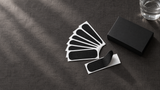
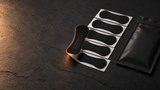
The PulseRing Sizing Tape reads in the same US sizes as PulseRing Pro, so the number you see is the number you order. If you fall between two sizes, choose the larger for PulseRing Pro, because it will still pass over a swollen knuckle after a workout or a warm night. Other brands give different advice: Oura, for example, suggests the smaller size. Follow the guidance for the ring you are buying.
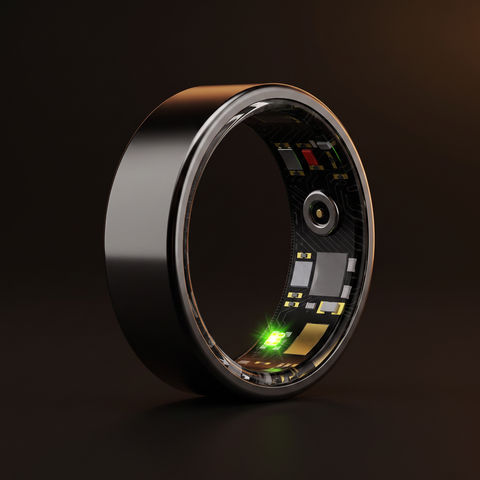
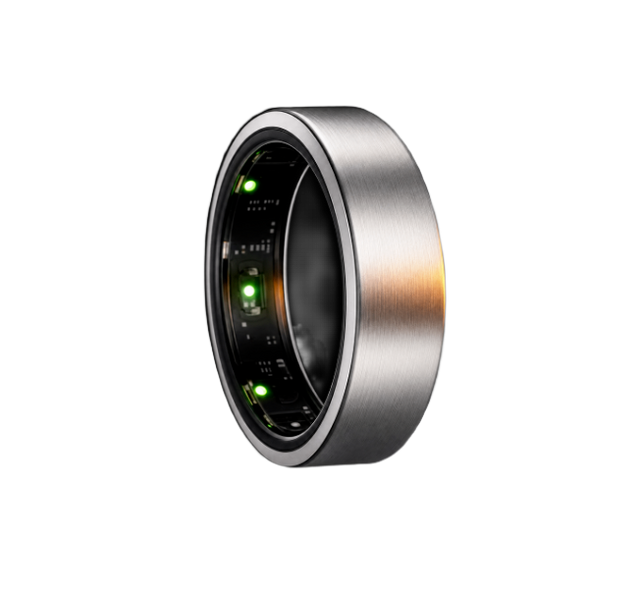
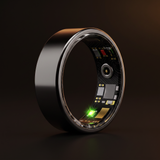
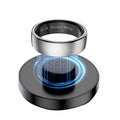
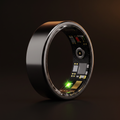
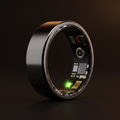
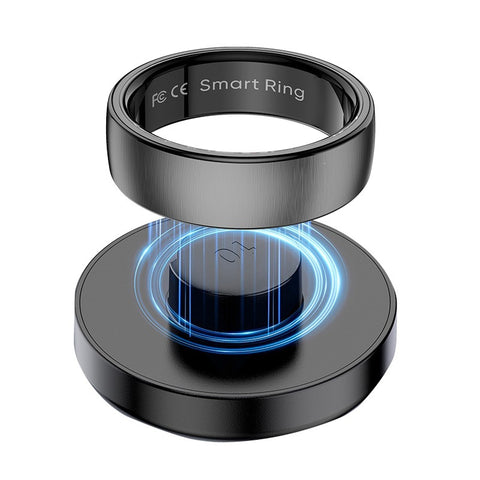
PulseRing Pro weighs about 4 grams, has a titanium shell and no screen, and comes in US sizes 7 to 14 in Midnight Black, Champagne Gold and Brushed Silver. Each order includes 30-day returns and one free size exchange, so if your chosen finger turns out to need a different size, you can swap it. Buying for a man's hand? See our smart ring for men page for sizes and finishes.
Can you move a smart ring to a different finger?
You can, but the fit will change. A ring sized for your middle finger is likely to be loose on your index finger and may not pass the knuckle of your ring finger. Moving between hands has the same problem.
For tracking, it makes sense to pick one finger and stay on it. Your app learns your normal overnight heart rate and heart rate variability over the first couple of weeks, and keeping the ring in the same place keeps the conditions as similar as possible from night to night. If you need to change fingers for a while, for example during a heatwave or pregnancy, look at your trends with that in mind.
When should you take a smart ring off?
A well-fitted ring should feel present but not pressing, and you should stop noticing it after a day or two. Take it off if:
- it leaves a deep red dent, or your finger tingles or goes pale;
- you injure the hand or finger, since swelling can build quickly;
- you are about to use power tools or machinery;
- your hands are swelling more than usual for no clear reason.
The NHS advises an urgent GP appointment or a call to NHS 111 if swelling in your hands is sudden, severe or painful, or the area is red or hot. If a ring ever becomes stuck on a swollen finger, get medical help rather than forcing it. Outside the UK, contact your doctor or local urgent care service.
Frequently asked questions
Which finger should I wear my smart ring on?
The index finger of your non-dominant hand is the usual starting point. Samsung says the index finger is often recommended, and Oura recommends the index, middle or ring finger. If a ring slips on your index finger, the middle finger is a good alternative. The most important thing is a snug fit on the exact finger you measured.
Is it better to wear a smart ring on the left or right hand?
Most people choose their non-dominant hand, so the left if you are right-handed. It does less gripping and lifting, which means fewer knocks and less pressure on the ring. Oura suggests the non-dominant hand to reduce scratching. If the ring fits better on your other hand, or a wedding band is in the way, use the hand that fits.
Can I wear a smart ring on my thumb or little finger?
You can, but they are not the usual choices. Oura recommends the index, middle or ring finger for the best signal. A little finger is often too thin for a secure fit, and a thumb moves a lot when you grip. Whichever finger you pick, the ring needs to sit snugly without spinning.
Why does my smart ring feel tight in the evening?
Fingers are usually at their fullest late in the day, and heat, exercise and a salty meal can all make hands swell. That is why you should measure late in the day. A ring that feels slightly firm in the evening is normal. If it leaves a deep mark, makes your finger tingle or will not pass your knuckle, it is too small.
Does wearing a smart ring on the wrong finger affect tracking?
Fit matters more than the finger. The index, middle and ring fingers all have a good blood supply for an optical pulse reading. What weakens the signal is a ring that spins, slides or presses unevenly. Choose the finger where the ring sits snugly and steadily, and keep it on that finger so your trends compare like with like.
Sources
- Introducing Galaxy Ring: what is a smart ring?, Samsung UK
- General FAQs, Oura Member Care
- Self-monitoring diary: using a pulse oximeter, NHS England, 2022
- Ring avulsion, Cleveland Clinic
- Hand swelling during exercise: a concern?, Mayo Clinic
- Swollen arms and hands (oedema), NHS
- Raynaud's, NHS
- Swollen ankles, feet and fingers in pregnancy, NHS
This article is for general information and is not medical advice. PulseRing Pro is a wellness device, not a medical device, and does not diagnose or treat any condition. If you are worried about your health, speak to your GP or a qualified clinician.