








WHOOP alternatives with no subscription: rings and bands compared
The main WHOOP alternatives without a membership, from a one-off smart ring to screenless bands, compared with WHOOP on cost, comfort, sleep, recovery and training.

In this article
The closest WHOOP alternatives without a membership are a smart ring you buy once, or a subscription-free screenless band. Both read heart rate, HRV and sleep overnight. The big differences are where you wear the sensor and how you pay. WHOOP's strap comes with an annual membership, and you never buy it outright.
Below, we compare WHOOP with a no-subscription ring on cost, comfort, sleep and training, and look at two screenless bands. Every WHOOP figure comes from WHOOP's own UK website. We also say plainly where WHOOP does more.
Key takeaways
- At the time of writing (October 2026), WHOOP's UK memberships cost £169, £229 or £349 a year. Each includes the device, a charger and a band.
- Screenless band alternatives include Polar Loop, sold with no subscription, and Google's Fitbit Air, which has an optional paid tier.
- In one lab study, an older Oura ring and an older WHOOP strap performed similarly for sleep. Both still needed work on sleep stages.
- WHOOP leans further into training, with strain, heart rate zones and VO2 max. A ring like PulseRing Pro focuses on sleep, recovery and one morning answer.
- Over two years, WHOOP One costs £338 in membership. PulseRing Pro costs £89 once, with no subscription.
How does WHOOP's membership model work?
WHOOP does not sell its strap as a one-off product. Its UK membership page says each membership includes a device, a charger and a unique set of features. You pay for the membership, and the hardware comes with it. WHOOP says this lowers the upfront cost of trying the device and funds new features over time.
At the time of writing (October 2026), WHOOP lists three tiers in the UK:
- WHOOP One, £169 a year: a WHOOP 5.0 device, a basic corded charger and a CoreKnit band. Features include sleep, strain and recovery insights, coaching, VO2 max, heart rate zones and Women's Hormonal Insights.
- WHOOP Peak, £229 a year: everything on One, plus a wireless PowerPack and a SuperKnit band. It adds Healthspan and Pace of Aging, a Health Monitor with alerts, and a real-time Stress Monitor.
- WHOOP Life, £349 a year: everything on Peak, with the WHOOP MG device and further heart health features. WHOOP notes that some of these are medically regulated and not available in every region.
There are useful extras in the small print. WHOOP lists a lifetime device warranty while you hold an active membership bought directly from WHOOP. It also offers 24/7 support and a 30-day window to cancel and return the device for a refund, minus shipping. A one-month free trial of Peak comes with a certified pre-owned WHOOP 5.0. You can upgrade tiers at any time, and downgrades take effect at the end of your billing cycle.
What are the main alternatives to WHOOP?
People look for a WHOOP alternative for different reasons: the ongoing cost, the strap on the wrist, or wanting fewer numbers. There are four broad routes, and each one swaps something.
- A smart ring with no subscription. You pay once and wear it on your finger. It covers sleep, HRV and recovery well, but offers less live training data. PulseRing Pro sits here at £89.
- A smart ring with a membership. Oura is the best known. You buy the ring, then pay monthly or yearly for the full insights. The subscription does not go away; it moves.
- A screenless band. This is the closest match to WHOOP's form. Polar Loop and Fitbit Air are covered below.
- A sports watch. It is stronger for workouts, with GPS and live heart rate zones, but bulkier to sleep in. Some people wear a watch for training and a ring at night.
Our comparison of Oura Ring alternatives covers other rings, with prices from each brand's own site.
Is there another band like WHOOP?
Yes, and two are worth knowing about if you want to keep a band but drop the membership. Both figures come from the brands' own UK stores at the time of writing (October 2026).
Polar describes Polar Loop as a screen-free, subscription-free fitness band. It was listed at £149.50, with no monthly fees. Polar lists sleep stages, nightly HRV and a Nightly Recharge score. That score combines sleep with heart rate, HRV and breathing data. Polar quotes up to 8 days of battery.
Google's Fitbit Air is a screenless band listed at £84.99, with up to a week of battery. It comes with 3 months of Google Health Premium. After that, Premium costs £7.99 a month, and Google says some features require it. So check which features you want before you count it as subscription-free.
Smart ring vs WHOOP: the comparison table
WHOOP figures come from WHOOP's own UK pages at the time of writing (October 2026). Ring figures are for PulseRing Pro, the ring we sell. Other rings vary, so check the specification of any ring you consider.
| Feature | WHOOP | PulseRing Pro |
|---|---|---|
| How you pay | Annual membership, device included | One-off £89, no subscription |
| Cost over two years | £338 (One), £458 (Peak), £698 (Life) | £89 |
| Where you wear it | Wrist band, bicep band or WHOOP smart clothing | Finger |
| Battery claim | 14+ days | Up to 7 days |
| Morning summary | Recovery, Sleep and Strain scores | One readiness score and one sentence: push, maintain or rest |
| Training features | Strain, heart rate zones, VO2 max, Strava sync | Activity tracking; no GPS |
| Women's health | Women's Hormonal Insights on every tier | Not offered |
| Wake-up alarm | Haptic alarm | Not listed |
| Warranty | Lifetime, while membership is active | 12 months |
For the cost maths across WHOOP, Oura, Ultrahuman and PulseRing Pro, see our guide to smart rings with no subscription.
Which is more comfortable to sleep in, a ring or a strap?
This is personal, and both are designed to be worn around the clock. A ring is smaller and lighter than any strap, and many people forget it is there. Others find any ring odd at first, especially if they never wear jewellery.
WHOOP's strength here is flexibility. Its accessories page shows how to wear the device in a bicep band on the upper arm. It can also sit in a pod inside WHOOP Body smart clothing. If a wrist strap annoys you in bed, you have other places to put it.
A ring's strength is that it rarely gets in the way. It does not catch on sleeves, and there is no strap to tighten. The trade-off is that a ring must fit well. A ring that spins on your finger gives weaker readings, so sizing matters more than with an adjustable band.
Smart ring vs WHOOP for sleep tracking
Both read your pulse with light sensors and combine it with movement to estimate sleep. Neither form is automatically better. The most useful independent evidence is a 2022 lab study in the journal Sensors.
It tested six wearables in 53 healthy adults over one night. They included an Oura Ring Generation 2 and a WHOOP 3.0. Each was compared with polysomnography, the sleep lab test that records brain activity.
All six devices were valid for the timing and duration of sleep. For sleep stages, the ring and the strap performed similarly. The ring agreed with the lab on 61% of sleep periods, and the strap on 60%. The authors concluded that all six devices need improvement for specific sleep stages.
Two cautions apply. Both devices tested were older models, and newer ones may perform differently. The study also tells you nothing about other rings, including PulseRing Pro. Its HRV, blood oxygen and sleep stage readings have not been independently validated.
The fair reading is that a good ring and a WHOOP strap are both reasonable sleep trackers. The stage split from any wearable is an estimate. A review commissioned by the Sleep Research Society says the same: consumer sleep trackers have improved, but have clear limitations, such as misclassifying time awake in the night.
Smart ring vs WHOOP for recovery and HRV
Both build recovery advice mainly from overnight heart rate and heart rate variability (HRV), compared with your own normal. WHOOP gives a Recovery score alongside Sleep and Strain. PulseRing Pro builds a personal baseline over roughly two weeks. Then it gives one readiness score and one plain sentence each morning: push, maintain or rest.
Our guide to readiness scores explains how these scores are built and how to use them. The real question is how you like to receive the answer. WHOOP gives you more numbers to explore, including Strain and, on higher tiers, longevity metrics. PulseRing Pro gives you fewer numbers and one clear answer. Our article on what a good HRV is covers what sits behind either.
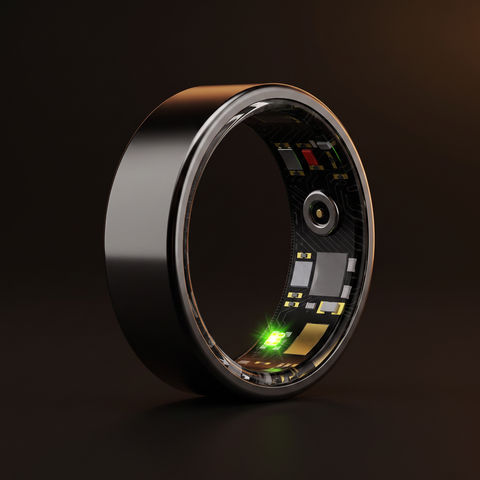
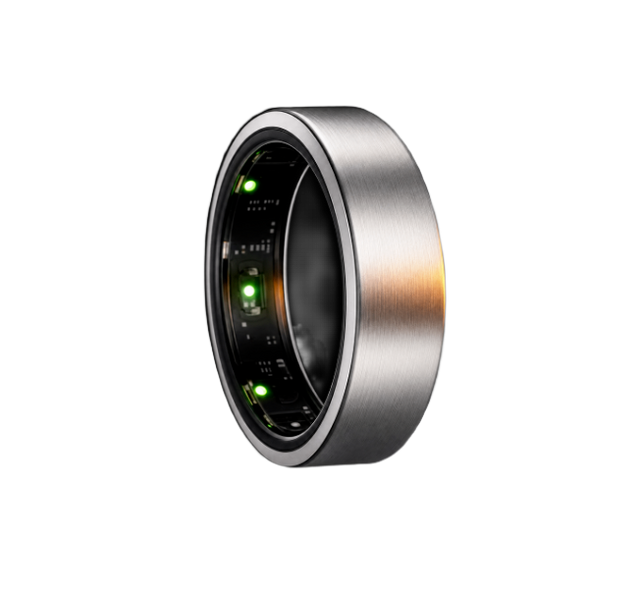
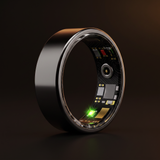
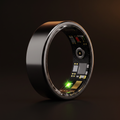
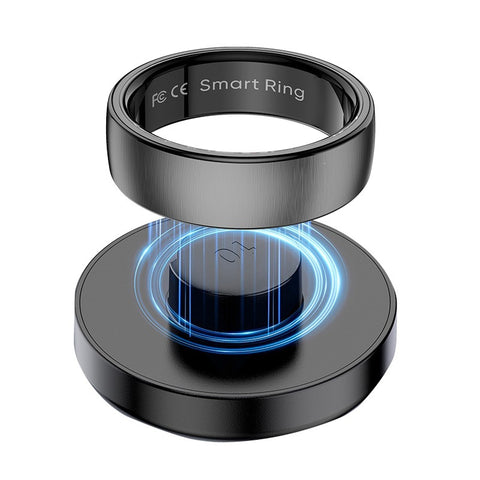
PulseRing Pro reads heart rate, HRV, blood oxygen and sleep stages overnight. Each morning it gives you one readiness score: push, maintain or rest. It costs £89 once, with no subscription, and lasts up to 7 days per charge.
Smart ring vs WHOOP for training
Here WHOOP does more, and it is fair to say so. WHOOP's membership page lists strain tracking, VO2 max, heart rate zones and steps on every tier. Its Strava integration brings in GPS, distance, pace, power and cadence from your Strava activities. If you want a daily training load number and zone data in one app, WHOOP is built for that.
A ring has practical limits during exercise. Hard gripping, such as heavy lifts, pull-ups or climbing, presses on the finger. That can disturb optical readings from any wearable. PulseRing Pro has no GPS and is not designed to track pace or distance. It logs activity and focuses on what training does to your sleep and recovery. If you lift, a slim ring protector for lifting and climbing covers the ring, and tracking carries on through it.
A common set-up is a sports watch or chest strap for live workout data and a ring for the night. That covers both jobs without a membership, though it means two devices.
Should you choose WHOOP or a WHOOP alternative?
Choose WHOOP if:
- You want detailed strain and training load data alongside recovery.
- You like wearing a sensor on your arm or in clothing, not on your hand.
- You value a lifetime device warranty and are happy to keep paying a membership.
- You want features PulseRing Pro does not have, such as Women's Hormonal Insights or a haptic alarm.
Choose a smart ring as your WHOOP alternative if:
- Sleep and recovery are your main goals, and you want one clear answer each morning.
- You would rather wear something small on your finger than a strap.
- You prefer to pay once. With PulseRing Pro there is no subscription to cancel.
- You already have a watch for workouts and just want better night data.
Choose a screenless band such as Polar Loop if you like WHOOP's strap but not the membership.
Frequently asked questions
Is there a WHOOP alternative with no subscription?
Yes. A smart ring you buy outright is one option. PulseRing Pro costs £89 once and includes heart rate, HRV, blood oxygen, sleep stages and a daily readiness score. Polar Loop is a screenless band sold with no subscription. Both do less than WHOOP for training load.
Is there any other band like WHOOP?
Yes. At the time of writing (October 2026), Polar Loop is a screen-free band listed at £149.50 with no monthly fees. Google's Fitbit Air is a screenless band listed at £84.99. It includes 3 months of Google Health Premium, which then costs £7.99 a month for some features.
Is WHOOP a subscription?
Yes. WHOOP is sold as a membership that includes the device, a charger and a band. In October 2026, WHOOP's UK site lists One at £169, Peak at £229 and Life at £349 a year. WHOOP also offers a one-month free trial of Peak with a certified pre-owned device.
Is a smart ring better than WHOOP for sleep?
Not automatically. A 2022 lab study tested six wearables. An older Oura ring and an older WHOOP strap scored similarly on sleep stages. All six were valid for sleep timing and duration. Comfort matters more for most people. The device you happily wear every night gives you the most complete data.
Does PulseRing Pro track strain or training load like WHOOP?
No. PulseRing Pro tracks heart rate, HRV, blood oxygen, sleep stages and activity. It gives one readiness score each morning: push, maintain or rest. It has no GPS and no strain score or live heart rate zones. Many people pair a ring with a sports watch for workouts.
Is there anything cheaper than WHOOP?
Yes, over two years at least. At the time of writing (October 2026), WHOOP One costs £169 a year, so £338 over two years. PulseRing Pro costs £89 once, and Polar Loop £149.50, both with no subscription. Compare the two-year total, not the headline price.
Sources
- WHOOP membership options (UK), WHOOP, accessed October 2026
- WHOOP One membership (UK), WHOOP, accessed October 2026
- WHOOP accessories (UK), WHOOP, accessed October 2026
- Polar Loop (UK), Polar, accessed October 2026
- Fitbit Air, Google Store UK, accessed October 2026
- Miller DJ, Sargent C, Roach GD. A Validation of Six Wearable Devices for Estimating Sleep, Heart Rate and Heart Rate Variability in Healthy Adults. Sensors, 2022
- de Zambotti M, et al. State of the science and recommendations for using wearable technology in sleep and circadian research. Sleep, 2024
This article is for general information and is not medical advice. PulseRing Pro is a wellness device, not a medical device, and does not diagnose or treat any condition. If you are worried about your health, speak to your GP or a qualified clinician.

Oura Ring subscription cost UK: membership over 1 year to 5 years
Oura Membership, Oura's name for its subscription, costs £5.99 a month or £69.99 a year in the UK. What it pays for, what the ring does without it, and the full cost over one to...

Oura Ring alternatives: 5 smart rings compared on price and features
Five Oura Ring alternatives compared on price, subscription, battery and features, using each brand's own website, with the trade-offs of each.

Which Finger to Wear a Smart Ring On: Index, Middle or Ring?
Index, middle or ring finger, left hand or right: how to choose where to wear a smart ring, and why swelling through the day matters for fit.