






Readiness Score Explained: Should You Train Hard Today?
How readiness scores turn overnight HRV, resting heart rate and sleep into one daily number, and how to use it to decide whether to push, maintain or rest.

In this article
A readiness score is a single daily number that estimates how recovered you are. It usually compares last night's heart rate variability (HRV), resting heart rate and sleep with your own recent baseline. A high score suggests push, a middling one maintain, a low one rest. Treat it as a prompt, and check it against how you feel.
This article explains what goes into a readiness score and what counts as good. It covers the research on training by recovery data. Then how to decide whether to train today, and when to ignore the number.
Key takeaways
- Readiness scores combine overnight HRV, resting heart rate, sleep and recent activity, measured against your personal baseline.
- After a hard aerobic session, the heart's rest and recover activity can take 48 hours or more to recover. That is what these scores try to catch.
- HRV-guided training gives similar fitness gains to fixed plans, often with fewer hard sessions.
- How you feel matters: self-reported wellbeing tracks training load at least as well as objective measures.
- Look at the trend over several days. One low score after a bad night is not a reason to abandon a plan.
What is a readiness score?
A readiness score condenses several overnight measurements into one number or label you can read in a second. Different brands use different names and scales. Oura calls it a Readiness Score and Whoop calls its version Recovery. Garmin has Training Readiness, and newer Apple Watch models have a Readiness app. The idea is the same. Each morning it tells you whether your body looks ready for hard training or needs an easier day.
Oura's own explanation of its Readiness Score shows how these scores work. It scores readiness from 0 to 100. Overnight signals include resting heart rate, body temperature and sleep quality. Longer-term measures cover HRV, sleep and activity balance. The balance measures compare your recent 14-day average with your longer-term average over roughly two months.
That comparison with your own history is the heart of any useful readiness score. An HRV of 40 ms might be excellent for one person and low for another. The score only means something once the device knows what is normal for you.
What is a good readiness score?
It depends on the brand, because scales and labels differ. Here is how two brands describe their own bands, from their help pages at the time of writing (October 2026).
| Brand | Scale | Bands |
|---|---|---|
| Oura | 0 to 100 | 85 to 100 Optimal; 70 to 84 Good; 60 to 69 Fair; 0 to 59 Pay attention |
| Apple Watch (Readiness app) | 0 to 10 | 8 to 10 Go for it; 5 to 7 Ready; 2 to 4 Pace yourself; 0 to 1 Recover |
Apple's guide to its readiness score says the score uses activity, daytime and overnight vitals, and sleep. It needs at least seven nights of wearing the watch to bed first. Whatever the scale, the useful question is the same. Is today's score normal for you, or part of a run of low days?
What goes into a readiness score?
| Input | What it tells you | What tends to lower your score |
|---|---|---|
| Heart rate variability (HRV) | How much your rest and recover nervous system is in charge overnight | Hard training, alcohol, poor sleep, illness, stress |
| Resting heart rate | How hard your heart is working at rest | Illness, alcohol, stress, accumulated fatigue |
| Sleep | How long you slept and how much time you spent in each sleep stage | Late nights, broken sleep, travel |
| Recent activity | How much load you have taken on compared with what you are used to | A sudden jump in training volume or intensity |
HRV and resting heart rate usually carry the most weight, because they respond quickly to stress and recovery. For more, read our guides to what a good HRV is and what a normal resting heart rate is. Sleep has its own score on most devices: see what a good sleep score is.
Is there science behind readiness scores?
Each brand's exact formula is private and has not been published for independent testing. The measurements behind the scores, though, have a solid research base in sport science.
Recovery takes longer after harder sessions
Stanley, Peake and Buchheit reviewed heart rate recovery after exercise. They looked at the heart's parasympathetic (rest and recover) activity after a single aerobic session. Full recovery took up to 24 hours after low-intensity exercise. After threshold-intensity exercise it took 24 hours to 48 hours. After high-intensity exercise it took at least 48 hours. Fitter people recovered faster. That is the delay a readiness score is trying to pick up.
Trends beat single readings
HRV moves a lot from night to night. Plews and colleagues, working with elite endurance athletes, recommended averaging HRV across several days. They advised against reacting to isolated readings. A review by Martin Buchheit makes the same case. To judge a change, you need to know the normal day-to-day variation for that person. And heart rate data work best combined with training logs and simple questionnaires.
Training by HRV works about as well as a fixed plan, with less hard work
A 2021 meta-analysis of HRV-guided training compared two groups. One adjusted daily training based on morning HRV, and the other followed a fixed plan. Overall, there was no significant difference in aerobic fitness or endurance performance. But HRV-guided groups often achieved similar or greater gains with fewer high-intensity sessions. Their results were also more consistent, with fewer negative responders. In plain terms, training to your recovery data does not make you fitter by magic. But it can help you avoid wasted hard days.
Should you train today? How to use your score
Use this as a simple decision guide, and combine the score with how you feel. A systematic review in the British Journal of Sports Medicine explains why. Athletes' self-reported wellbeing responded to training load more sensitively than common objective measures such as heart rate.
| Your score | How you feel | What to do |
|---|---|---|
| High or normal | Good, keen to train | Push. This is the day for your planned hard session. |
| High or normal | Tired, sore or flat | Maintain. Start the session and ease off if it feels wrong. |
| Low | Fine | Maintain. Swap intervals for steady, easy work and check again tomorrow. |
| Low | Tired, run down or unwell | Rest. Take a rest day or a gentle walk. |
| Low for several days | Any | Rest and review. Cut back training, look at sleep, stress and alcohol, and see your GP if you feel unwell. |
A few rules of thumb help:
- Give the device two weeks or more to learn your baseline before you trust the score.
- Read the direction of travel over three to seven days, not just today's number.
- Keep easy days easy when your score is low, rather than skipping movement altogether.
- Do not train hard when you are ill. A practical guide to overtraining syndrome lists stopping training after an infection as a standard prevention measure.
HRV dipped and not sure why? Our guide to why your HRV dropped covers the usual causes.
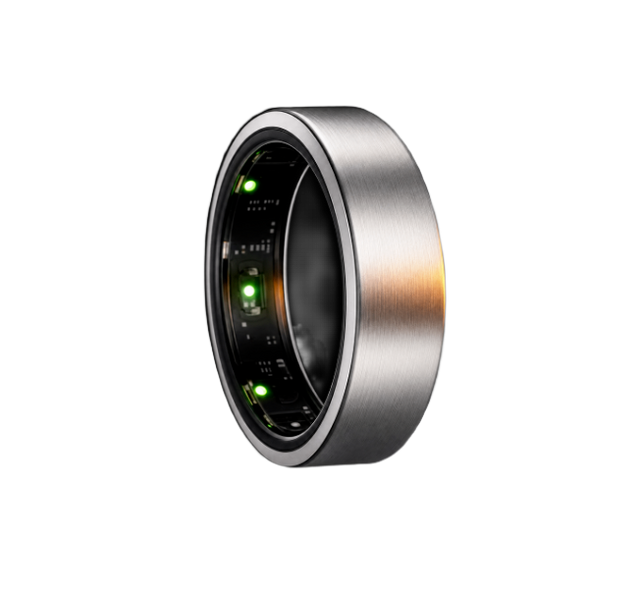
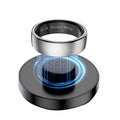
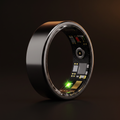
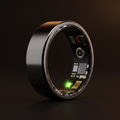
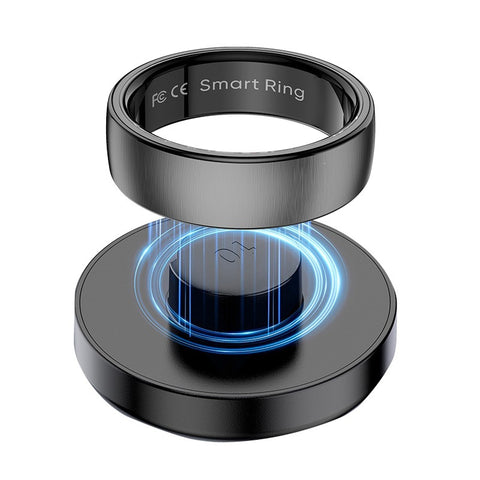
PulseRing Pro keeps it simple. It reads your heart rate, HRV, blood oxygen and sleep overnight. It builds your personal baseline over roughly two weeks. Each morning you get one readiness score and one plain sentence: push, maintain or rest. Its readings are estimates and have not been independently validated, so read the trend. There is no subscription: every metric is included in the one-off £89 price.
When should you ignore your readiness score?
A readiness score is a guide built from a few overnight signals. It cannot see everything.
- When you know the cause. One low score after a wedding, a late flight or a broken night with a baby is not news. Your plan does not need to change unless the dip lasts.
- On race or event day. Nerves, travel and an early alarm can lower overnight scores. Your training and taper matter far more than one morning's number.
- When your body disagrees. A good score does not override a painful joint, a niggling injury or real exhaustion. A review of sleep and athletic performance found sleep loss can hurt sport-specific and mental performance. That holds even when some maximal efforts hold up.
- When you are ill. If you have a fever or feel unwell, rest regardless of the score.
What readiness scores cannot tell you
Readiness scores are wellness tools. They do not measure muscle damage, injury risk, hydration or nutrition directly, and they do not diagnose anything. They also cannot tell you whether a long-term drop in performance is overtraining, illness or something else. That needs a proper conversation with a coach or your GP.
Used well, though, a readiness score gives you a daily nudge to match training to recovery. Pair it with a simple training log. And give an honest answer to one question each morning: how do I feel today?
Frequently asked questions
What is a good readiness score?
It depends on the device and its scale. On Oura, 85 or more is Optimal and 70 to 84 is Good. On Apple Watch's 0 to 10 scale, 8 or more means go for it. The trend over several days matters more than a single score. It only becomes reliable once the device has learned your baseline.
How is a readiness score calculated?
Most readiness scores compare overnight heart rate variability, resting heart rate, sleep and recent activity with your own recent averages. Each brand weights these inputs differently and keeps the exact formula private. The common thread is that your score reflects how you compare with your normal, not with other people.
Should I train with a low readiness score?
Usually you can still move, but keep it easy. Swap hard intervals or heavy lifting for an easy session or a walk, and check again the next morning. If your score stays low for several days, or you feel unwell, take proper rest. Look at sleep, stress and alcohol. See your GP if symptoms persist.
Why is my readiness score low when I feel fine?
Alcohol, stress or a short night can lower overnight HRV and raise resting heart rate before you feel any different. The first signs of an illness can also show up this way. If you feel good, a moderate session is reasonable. If the low score continues, treat it as a signal to ease off.
How long does it take for a readiness score to become accurate?
Readiness scores need to learn your personal baseline, which usually takes around two weeks of consistent wear. PulseRing Pro builds its baseline over roughly two weeks. Until then, treat the score as provisional. Rely more on how you feel and on your training plan.
Sources
- Readiness Score, Oura Member Care, 2026
- Understand your readiness score on Apple Watch, Apple Support, accessed October 2026
- Cardiac parasympathetic reactivation following exercise: implications for training prescription, Stanley, Peake and Buchheit, Sports Medicine, 2013
- Training adaptation and heart rate variability in elite endurance athletes: opening the door to effective monitoring, Plews et al., Sports Medicine, 2013
- Monitoring training status with HR measures: do all roads lead to Rome?, Buchheit, Frontiers in Physiology, 2014
- Heart rate variability-guided training for enhancing cardiac-vagal modulation, aerobic fitness, and endurance performance: a methodological systematic review with meta-analysis, Manresa-Rocamora et al., International Journal of Environmental Research and Public Health, 2021
- Monitoring the athlete training response: subjective self-reported measures trump commonly used objective measures, Saw, Main and Gastin, British Journal of Sports Medicine, 2016
- Overtraining syndrome: a practical guide, Kreher and Schwartz, Sports Health, 2012
- Sleep and athletic performance: the effects of sleep loss on exercise performance, and physiological and cognitive responses to exercise, Fullagar et al., Sports Medicine, 2015
This article is for general information and is not medical advice. PulseRing Pro is a wellness device, not a medical device, and does not diagnose or treat any condition. If you are worried about your health, speak to your GP or a qualified clinician.

Smart ring for running: what it adds to your running watch
A ring will not track your pace or distance, but it can show how well you recover between runs. Here is how a smart ring and a running watch work together, and what the research...

Signs of Overtraining and How Data Helps You Avoid It
The physical and mental signs of overtraining, how to tell it from normal tiredness, what your resting heart rate and HRV can and cannot show, and how to recover.

Dry January benefits for sleep and HRV: what a month off does
What the Dry January research really found about sleep, what an alcohol-free month may show on a wearable, how to run it as a simple experiment, and who should not stop drinking...