




Muscle Knots: What They Really Are and How to Ease Them
What muscle knots are, why scientists still argue about trigger points, a step-by-step plan for a knot in your back, what trigger point massage can and cannot do, and when to see a GP or physiotherapist.

In this article
Muscle knots are small, tender spots in a muscle that feel tight or lumpy. They are common in the upper back, neck and shoulders. Clinicians call them myofascial trigger points, though scientists still argue about what they are. Most ease within weeks with movement, heat, gentle pressure and stretching. Pain that lingers or comes with other symptoms needs a doctor.
Below: what the research really shows and a step-by-step plan for a knot in your back. Then when to see a GP or physiotherapist.
Key takeaways
- A "knot" is not a tangle in the muscle. It is a sore, tight spot, and experts still disagree about what is happening underneath.
- NHS self-care for back and neck pain comes first. Keep moving, use heat for stiffness and ask a pharmacist about painkillers.
- Holding gentle pressure on a tender spot may make it less sensitive for a while. Massage studies show short-term benefits at best.
- A lump that grows, feels hard and fixed, or lasts more than 2 weeks is not a knot to massage. See a GP.
- Some signs need medical advice, not a massage ball. They include pain between the shoulder blades that will not settle, numbness, weakness, fever or chest pain.
What is a muscle knot?
A muscle knot is a spot that is tender to press. It often sits in a band of muscle that feels tighter than the tissue around it. Nothing is literally tied in a knot. The word describes how it feels under your fingers.
The clinical name is a myofascial trigger point. A 2018 international Delphi study brought together 60 experts from 12 countries. They agreed that identifying one needs three things: a taut band, a hypersensitive spot and referred pain. Referred pain can be a dull ache, tingling or burning felt away from the spot.
Shah and colleagues at the US National Institutes of Health describe two kinds. Active trigger points hurt on their own. Latent ones only hurt when pressed.
How do I tell if I have a muscle knot?
Press slowly along the sore muscle with your fingertips. A knot usually feels like a tender spot within a tighter band. Pressing it may reproduce a familiar ache, sometimes spreading a little way. If you find a hard, fixed lump instead, check the table further down first.
Are muscle knots real? What the science says
The soreness is real. What lies behind it is far less settled than most guides suggest.
First, knots are hard to find reliably. A 2009 systematic review by Lucas and colleagues looked at 9 studies of whether examiners agree on trigger points. None met all the quality criteria. Examiners agreed more on what patients reported, such as tenderness, than on what they could feel. The authors concluded that physical examination could not be recommended as a reliable test.
Second, the explanation is disputed. In a 2015 review in Rheumatology, Quintner, Bove and Cohen made a strong case. They argued that trigger points as distinct abnormal spots in muscle have no scientific basis. They did not deny the pain and tenderness people feel. They said it can be explained by how the nervous system processes pain.
Shah's team support the trigger point model. They suggest inflammation and a more sensitive nervous system may play a part. They also accept that much of the terminology is inconsistent or controversial.
What this means for you: popular explanations, such as waste trapped in the muscle or fibres stuck together, are not established facts. You do not need to "break up" anything. The realistic aim is to calm a sensitive area and get it moving comfortably again.
What causes muscle knots?
Nobody knows for certain. Among trigger point researchers there is general agreement that overuse or a direct blow to the muscle can start them. Bron and Dommerholt point to overload. That can come from holding one posture, repeated low-level effort or hard lowering movements. It matters most when the work exceeds what the muscle can handle and recovery is disturbed. In everyday life, the usual suspects are:
- Long spells in one position. The NHS lists long desk sessions among the most common causes of neck pain. Sleeping with the neck locked in an awkward position is another.
- A pulled muscle. The NHS back pain guidance names a strain as a common cause of back pain.
- A sudden jump in training. New exercises, more volume or less recovery between sessions.
Some guides also blame dehydration, poor diet and stress. We found no good evidence that these cause knots directly.
Is it a knot or something else?
Check this before you press on anything.
| What you notice | Likely cause | What to do |
|---|---|---|
| A tender spot in a tight band, a dull ache that may spread, no clear injury | Muscle knot | The steps below. See a GP or physiotherapist if it lasts a few weeks |
| Soreness across the muscles you worked, coming on after unfamiliar or harder training | Delayed onset muscle soreness | Train lighter for a day or two. Our guide to DOMS covers how long it lasts |
| A sudden, painful tightening lasting seconds to 10 minutes | Cramp | See a GP if leg cramps last longer than 10 minutes, disturb your sleep, or come with numbness or swelling |
| Pain, swelling or bruising after a specific movement or injury | Strain | The NHS advises avoiding heat and massage for the first couple of days |
| A lump that grows, is hard and does not move, or lasts more than 2 weeks | Not a knot: needs checking | See a GP, as the NHS guide to lumps advises |
| Throbbing pain and swelling in one calf or thigh, with red or darkened skin | Possible blood clot (DVT) | Do not massage. Urgent GP appointment or NHS 111, or 999 if you are short of breath or have chest pain |
How to get rid of a knot in your back: step by step
These steps follow NHS self-care advice for back and neck pain, with self-massage added where it fits. Give them a week or two.
- Keep moving. The NHS advises staying active and carrying on with daily activities rather than staying in bed. Keep a stiff neck moving rather than wearing a collar.
- Use heat for stiffness. The NHS suggests a heat pack or hot water bottle wrapped in a tea towel for stiffness or spasms. For the neck, that means 20 minutes, 2 or 3 times a day. If the pain started with a sudden injury, skip heat for the first couple of days.
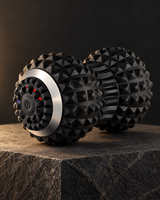
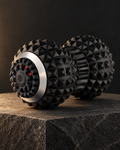
- Hold gentle pressure on the tender spot. Stand with a ball between your back and a wall. Lean in until you feel firm pressure you can still breathe through. Hold still for up to about 90 seconds, the hold time used in the trial below. If the tenderness sharpens rather than fades, ease off. A peanut-shaped ball such as the Peak Peanut Pro lets your spine sit in the groove. Pressure then stays on the muscles either side.
- Move the area afterwards. Try slow shoulder rolls, reaching overhead or gently turning your upper body. The NHS suggests stretches for back pain but says to stop if pain gets worse.
- Ask about painkillers. For back pain, the NHS suggests anti-inflammatories such as ibuprofen, which do not suit everyone. It says paracetamol on its own is not recommended. For neck pain it lists paracetamol, ibuprofen or ibuprofen gel. Ask a pharmacist.
- Change what set it off. Break up long desk sessions and do not hold your neck in one position for long. Add new exercises gradually.
- If it has not settled after a few weeks, get it assessed. In many areas, most adults can refer themselves to NHS physiotherapy without seeing a GP first. Outside the UK, ask your own doctor.
Does trigger point massage work?
Trigger point massage, also called ischaemic compression or pressure release, means holding pressure on a tender spot until it eases. Here is what the better studies found.
| Approach | What the evidence shows |
|---|---|
| Holding pressure yourself | In a 2018 trial by Wilke and colleagues, 50 healthy adults had 90 seconds of static foam roller pressure on a tender calf spot, slow rolling, or a placebo. Only static pressure made the spot slightly less sensitive, and the groups did not differ significantly from each other. |
| Trigger point pressure by a therapist | A 2022 meta-analysis of 17 trials found it raised the pressure people could tolerate (11 studies, 427 people) but made no significant difference to the pain they reported (7 studies, 251 people). |
| Trigger point therapy for long-term pain | A 2019 meta-analysis of 19 trials with 1,047 people found no short-term pain relief, some gains in function, and evidence too weak to recommend it. |
| Massage for low back pain | A 2015 Cochrane review of 25 trials with 3,096 people found massage beat sham or no treatment for pain and function in the short term, not the long term. Evidence quality was low or very low. |
| Ultrasound and TENS | Often listed as knot treatments, but NICE guidance says not to offer either for low back pain, and to consider massage only as part of a package that includes exercise. |
The fair reading: pressure can make a sore spot less sensitive for a while, and many people like how it feels. It is a comfort tool, not a cure. Harder is not better. In the Cochrane review, more pain was the most commonly reported side effect, in 1.5% to 25% of participants.
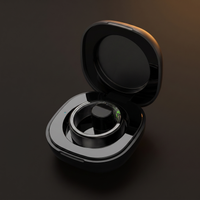
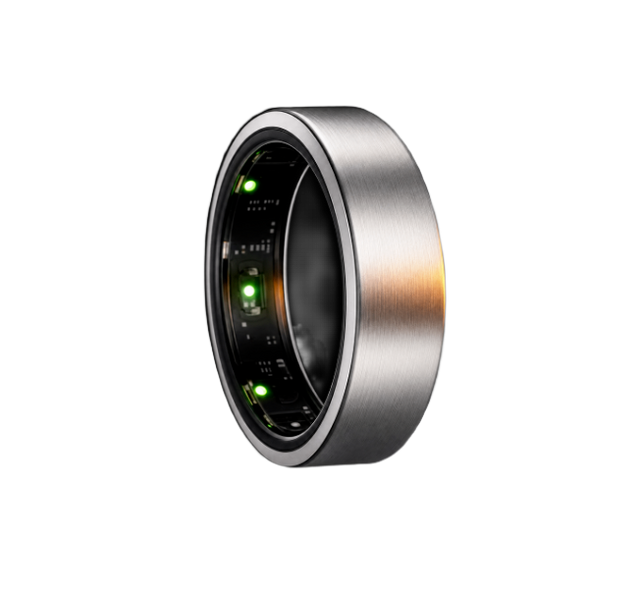
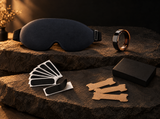
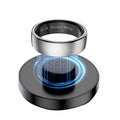
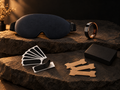
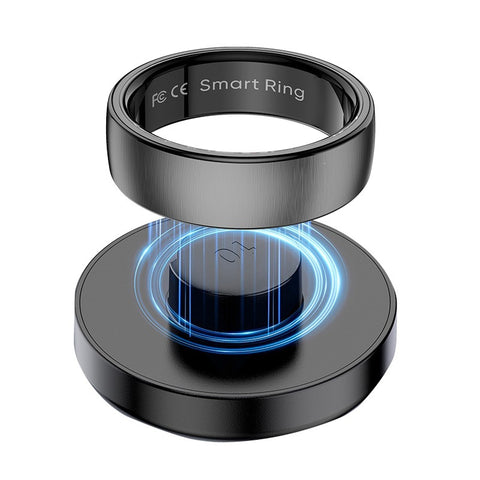
Want a tool for the pressure step? The Total Recovery System (£149) includes the Peak Peanut Pro massage ball. It also has PulseRing Pro, a charging case and a protector. The Peak Peanut Pro has a groove that sits over your spine, plus three vibration speeds and a cycling mode. It switches itself off after 10 minutes and charges by USB. It is a comfort and self-massage tool, and it does not treat knots, pain or injury. PulseRing Pro gives you one readiness score each morning and one plain call: push, maintain or rest. It cannot find or measure a knot.
Where not to press
- On the spine or any bony point, or the front and sides of the neck.
- Over swelling, bruising, broken skin, or an injury from the last couple of days.
- On a lump that is hard, fixed in place or getting bigger.
- On a calf that is swollen, throbbing, red or darkened.
- Anywhere you feel numbness, tingling or pins and needles.
Some people should ask a GP or physiotherapist before using a massage tool. That includes anyone taking blood thinners or who is pregnant. It also includes anyone with a bleeding disorder or a condition affecting bones or circulation.
When to see a GP or physiotherapist
This list draws on NHS guidance on back pain, neck pain and lumps. See a GP, or your own doctor outside the UK, if:
- the pain has not improved after a few weeks of self-care, or stops you doing your usual activities
- the pain is in the top of your back, between the shoulder blades. Many people assume this is a knot, but the NHS lists it as a reason to see a GP
- it is worse at night, does not ease with rest, or is worse when you sneeze, cough or poo
- you have lost weight without trying
- there is a lump or swelling in your back, or your back has changed shape
- any lump lasts more than 2 weeks
- neck pain comes with pins and needles or a cold arm
Get an urgent GP appointment or call NHS 111 if back pain comes with feeling hot, cold, shivery or unwell. The same applies if it is severe, starts suddenly or is getting worse quickly.
Call 999 or go to A&E if back pain comes with pain, tingling, weakness or numbness in both legs. Do the same for loss of feeling around your genitals or anus, or new bladder or bowel problems. Chest pain, or back pain after a serious accident, also means 999.
How to stop knots coming back
To prevent neck pain, the NHS suggests sitting upright with your shoulders rolled gently back. Do not hold your neck in one position for long, and avoid sleeping on your front. If your neck is often stiff after screen days, our guide to whether neck stretchers work covers what helps.
In training, build new exercises in gradually and keep easy days easy. Know the signs of overtraining. Our guide to active recovery versus rest days shows how to plan both into your week.
Frequently asked questions
What causes muscle knots?
No one knows for certain, because researchers still disagree about what knots are. The usual explanation is overload. That means holding one posture for a long time, repeated effort, unfamiliar training or a strain. The NHS lists long desk sessions among the most common causes of neck pain.
How do you get rid of a knot in your back?
Keep moving and use a wrapped heat pack for stiffness. Hold gentle pressure on the sore spot with a ball against a wall, for up to about 90 seconds. Then move the area through comfortable stretches and ask a pharmacist about painkillers. If it has not settled after a few weeks, see a GP or physiotherapist.
Can a muscle knot heal on its own?
Often, yes. There is no reliable figure for knots, because they are hard to define and measure. The NHS says most back pain improves within a few weeks, and most neck pain only lasts a few weeks. If a sore spot lasts longer or keeps coming back, get it checked.
How does it feel when a muscle knot is released?
Usually the tenderness fades under steady pressure and the area feels looser. Studies have not shown that anything physically lets go. In one trial, 90 seconds of pressure made a tender calf spot only slightly less sensitive. Ease off if the pain sharpens instead.
Does trigger point massage work?
It may make a tender spot less sensitive for a while, but the evidence is weak. A 2022 meta-analysis found pressure raised pain tolerance without changing reported pain. A 2019 review found no short-term pain relief for chronic pain. Treat it as a comfort tool, and never press so hard that you wince.
When should I worry about a muscle knot?
See a GP about a lump that grows, feels hard and fixed or lasts more than 2 weeks. The same goes for pain between your shoulder blades, pain worse at night or weight loss. Get urgent help for a swollen calf, fever with back pain, numb legs, bladder or bowel changes, or chest pain.
Sources
- Fernández-de-las-Peñas C, Dommerholt J. International Consensus on Diagnostic Criteria and Clinical Considerations of Myofascial Trigger Points: A Delphi Study, Pain Medicine, 2018
- Shah JP et al. Myofascial Trigger Points Then and Now: A Historical and Scientific Perspective, PM&R, 2015
- Lucas N et al. Reliability of physical examination for diagnosis of myofascial trigger points: a systematic review of the literature, Clinical Journal of Pain, 2009
- Quintner JL, Bove GM, Cohen ML. A critical evaluation of the trigger point phenomenon, Rheumatology, 2015
- Bron C, Dommerholt JD. Etiology of myofascial trigger points, Current Pain and Headache Reports, 2012
- Wilke J et al. Immediate effects of self-myofascial release on latent trigger point sensitivity: a randomized, placebo-controlled trial, Biology of Sport, 2018
- Lu W et al. Effect of ischemic compression on myofascial pain syndrome: a systematic review and meta-analysis, Chiropractic and Manual Therapies, 2022
- Denneny D et al. Trigger Point Manual Therapy for the Treatment of Chronic Noncancer Pain in Adults: A Systematic Review and Meta-analysis, Archives of Physical Medicine and Rehabilitation, 2019
- Furlan AD et al. Massage for low-back pain, Cochrane Database of Systematic Reviews, 2015
- Low back pain and sciatica in over 16s: assessment and management (NG59), NICE
- Back pain, NHS, 2026
- Neck pain, NHS, 2023
- Lumps, NHS, 2024
- DVT (deep vein thrombosis), NHS
- Leg cramps, NHS
- Sprains and strains, NHS
- Get NHS help for back or joint problems from community musculoskeletal (MSK) services, NHS
This article is for general information and is not medical advice. PulseRing Pro is a wellness device, not a medical device, and does not diagnose or treat any condition. If you are worried about your health, speak to your GP or a qualified clinician.

Active recovery vs rest days: which does your body need?
What active recovery does and does not do according to the research, when a full rest day is the better call, and an example week that builds in both.

Do neck stretchers work? An honest look at the evidence
An honest look at the evidence on neck stretchers and cervical traction, whether they help posture, who should avoid them, how to use one gently, and when neck symptoms need a d...

Smart ring for running: what it adds to your running watch
A ring will not track your pace or distance, but it can show how well you recover between runs. Here is how a smart ring and a running watch work together, and what the research...