




DOMS, short for delayed onset muscle soreness, is the aching, tender stiffness that builds in the hours after hard or unfamiliar exercise. It usually peaks one to three days later and fades within about five days on its own. It is a normal response to new load: not proof of a good workout, and usually not an injury.
Below: the causes, a day-by-day timeline, DOMS versus injury, what the research says eases it, training through it, and the rare warning signs that need urgent help.
Key takeaways
- DOMS is usually worst 48 to 72 hours after the session and rarely lasts more than five days.
- Unfamiliar exercise and lowering (eccentric) movements cause most of it.
- Sudden pain mid-session, one sore spot, bruising or pain lasting over a week points to an injury instead.
- Massage has the strongest evidence for easing soreness. Stretching has almost none. Time is the real cure.
- Severe pain, weakness and dark, tea-coloured urine after exercise can mean rhabdomyolysis: get urgent help.
What is DOMS?
The Cleveland Clinic describes DOMS as muscle pain that sets in one to three days after a new activity or a harder session than usual. You feel it in the exact muscles you worked, with tenderness, stiffness and some weakness. A 2018 review by Hotfiel and colleagues calls it a mild, microscopic type of muscle injury.
What causes DOMS?
Eccentric work is the main trigger: a muscle working while it lengthens. Think downhill running, lunges, the lowering half of a squat, curl or pull-up, and landing from jumps.
A classic review of DOMS by Cheung and colleagues found it is most common when people return after time off or start a new type of activity, and that intensity and duration both matter.
Lactic acid often gets the blame, but it is only one of six theories Cheung's review listed. The Hotfiel review names the main mechanism as tiny damage inside muscle cells, followed by a local inflammatory response.
Is DOMS a sign of a good workout?
Not necessarily. The Cleveland Clinic says a session can be productive without leaving you sore. Soreness mostly tells you the work was unfamiliar, which is why it fades as you keep training. A 2003 review by McHugh describes the repeated bout effect: one bout of eccentric exercise protects the muscle against damage from later bouts. The first week of a new plan tends to hurt more than the weeks that follow.
How long does DOMS last?
For most people, a few days. The Cleveland Clinic says it rarely lasts more than five days and should ease each day. The typical pattern:
| Time after the session | What is typical |
|---|---|
| During and just after | Little or no soreness yet. DOMS builds over several hours. |
| Day 1 (about 24 hours) | Stiffness and tenderness become obvious, especially when you stretch, press or use the muscle. |
| Days 2 to 3 (48 to 72 hours) | Usually the worst point. Stairs and sitting down can feel hard. |
| Days 4 to 5 | Easing each day, and usually gone by the end. |
| A week or more | Not typical of DOMS. It may be a strain: see a GP or physiotherapist. |
The 48 to 72 hour peak comes from the Hotfiel review, which explains the delay as a chain of local and whole-body responses that take time to build.
Is it DOMS or an injury?
The pattern usually makes it clear. These clues draw on the Cleveland Clinic and the NHS guide to sprains and strains:
| Clue | More like DOMS | More like an injury |
|---|---|---|
| When it started | Built up over hours, noticed the next day | At a particular moment in the session, often a sudden pain |
| Where it hurts | Spread across the muscles you worked | One specific spot, or around a joint |
| How it feels | Dull ache, tender and stiff, worse when stretched or pressed | Sharp pain, sometimes with muscle spasms |
| Swelling and bruising | Stiffness, with mild swelling at most | Visible swelling or bruising |
| Using it | Hard to get going, loosens a little as you move | You cannot put weight on it or use it normally |
| How it changes | Better each day, gone within about five days | Lingers: the NHS says most strains feel better after about 2 weeks |
If it looks like a strain, the NHS advises protection, rest, ice, compression and elevation for the first 2 to 3 days, with no heat, alcohol or massage for the first couple of days. Contact NHS 111 (or your own doctor outside the UK) if the pain is severe or worsening, there is a lot of swelling or bruising, or you cannot walk more than a few steps. Go to A&E or call 999 if you heard a crack, the area has changed shape, is numb or tingling, or the skin looks blue, grey or cold.
How to get rid of DOMS faster: what the evidence says
Nothing cures DOMS overnight, but some methods ease it. A 2018 meta-analysis of 99 studies by Dupuy and colleagues compared them. Higher effect sizes mean less soreness:
| Method | What the research found | Worth trying? |
|---|---|---|
| Massage | The largest effect of any method (effect size 2.26), with benefits seen up to 96 hours after exercise | Yes, professional or self-massage |
| Easy movement (active recovery) | Reduced soreness (effect size 0.94) | Yes, if it stays genuinely easy |
| Compression garments | Reduced soreness (effect size 0.92) | Optional |
| Cryotherapy | A smaller effect (0.53), seen within 6 hours of exercise but not from 24 hours on | Optional |
| Cold water immersion | A smaller effect (0.47). A Cochrane review found some evidence of benefit, from low-quality trials | If you like it |
| Stretching | No reduction in soreness | Not for soreness |
Two caveats: participants knew which treatment they got, so the Dupuy authors could not rule out a placebo effect, and the Cochrane review of cold water immersion rated its 17 small trials (366 people) as low quality.
On stretching, a Cochrane review of 12 studies found it cut next-day soreness by about one point on a 100-point scale: not a clinically important difference. For painkillers, ask a pharmacist; Cheung's review found anti-inflammatory effects varied with dose and timing.
Foam rollers and massage balls
Self-massage is the practical version of the top-ranked method. A 2019 meta-analysis by Wiewelhove and colleagues pooled 21 foam rolling studies and found that rolling after exercise reduced muscle pain perception by about 6%. The authors called the effects rather minor overall. Expect a little relief, not a fix.
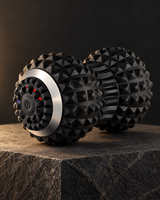
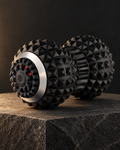
If you like the feeling, a few minutes of moderate pressure is reasonable. The Peak Peanut Pro is a peanut-shaped vibrating massage ball for calves, glutes, feet and the muscles either side of the spine. It has three vibration speeds plus a cycling mode, switches itself off after 10 minutes and charges by USB. It is a comfort and self-massage tool: it does not treat injury or speed up repair. Avoid the spine itself, stop if you feel sharp pain, numbness or tingling, and skip anything that looks like a fresh strain.
Should you train with DOMS?
Usually yes, with changes. The Cheung review found exercise is the most effective way to ease DOMS pain, though only for a while, and warned that sore muscles change how you move, which may raise injury risk if you return to full intensity too soon. Its advice: for 1 to 2 days after heavy DOMS, cut intensity and duration, or train less affected body parts.
- Mildly stiff, loosens as you warm up: train as planned, perhaps with a little less load on the sore muscles.
- Clearly sore, but moving normally: train a different body part, or do easy cardio such as walking, cycling or swimming.
- Sore enough to limp or change how you move: rest those muscles. Moving badly is not recovery.
- Weak, swollen, or with any warning sign below: stop and get checked.
Whole-body recovery matters too. Our guide to readiness scores explains how sleep, resting heart rate and HRV feed into that choice.
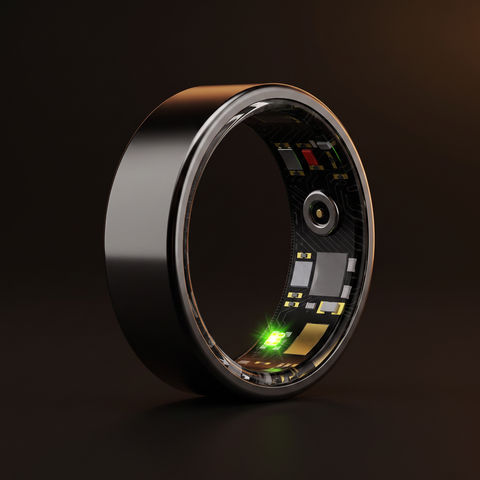
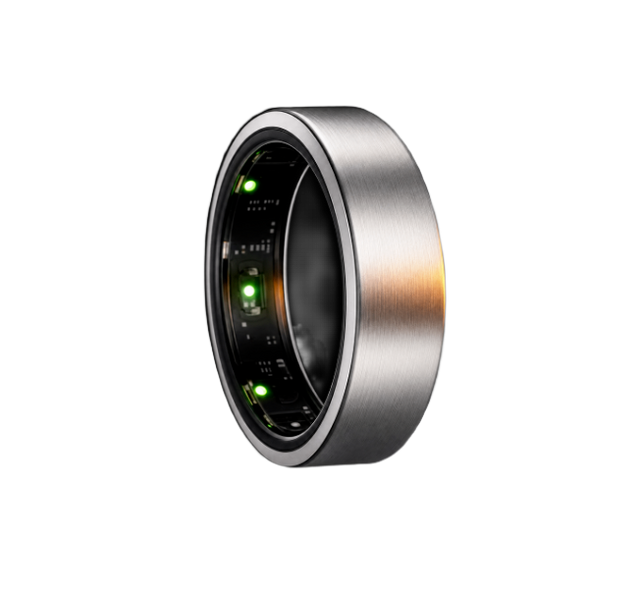
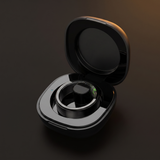
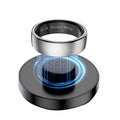
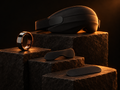
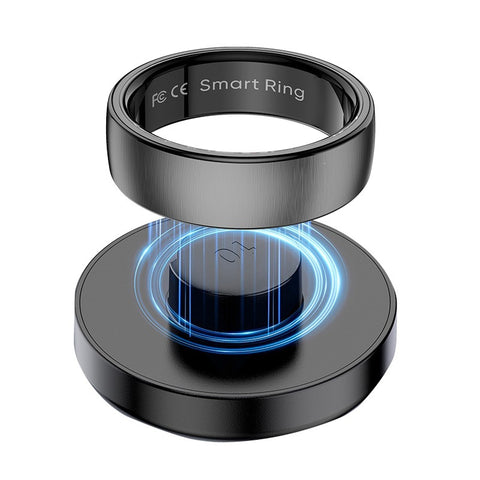
PulseRing Pro does not measure muscle soreness or muscle damage. It shows the rest of the picture: it tracks heart rate, HRV, blood oxygen and sleep, then gives you one readiness score each morning with one plain sentence: push, maintain or rest. Sore legs with a normal score suggests training something else; sore legs with a low score after a poor night makes a stronger case for an easy day. No subscription, £89.
How to prevent DOMS, or at least make it milder
- Build up new exercises gradually. Cheung's review recommends introducing eccentric or new activities progressively over 1 or 2 weeks.
- Repeat the movement. Thanks to the repeated bout effect, the same session hurts less next time.
- Start below your old level after a break, and keep downhill running and heavy lowering modest while they are new.
- Keep the basics in place. Our guide on how to get more deep sleep covers the habits with the best evidence, and why HRV drops explains a dip after a hard block.
When muscle soreness is not DOMS: urgent warning signs
Rarely, extreme exercise breaks down enough muscle to harm the kidneys. This is rhabdomyolysis. The US Centers for Disease Control and Prevention lists the main signs as:
- muscle pain, cramps or aches far more severe than you would expect
- dark urine, the colour of tea or cola
- feeling weak or tired, or unable to finish a workout you could do before
Australia's government health service, healthdirect, adds muscle swelling and fever, notes symptoms may take hours or days to start, and lists causes including extreme exercise such as marathons, heavy drinking and, rarely, medicines such as statins. The Cleveland Clinic also treats compartment syndrome as an emergency.
If you have severe muscle pain or swelling with dark urine or weakness after exercise, get medical help immediately: go to A&E or call 999 in the UK, or contact your local emergency service elsewhere. Do not wait to see if it settles.
See a GP or physiotherapist if
- the pain lasts more than a week or is getting worse rather than better
- the pain is sharp and constant, or sits in one spot
- a suspected strain is not improving after treating it yourself
- you get heavy DOMS after most sessions, even ones you are used to
- you take a statin or another regular medicine and develop unexplained muscle pain
Frequently asked questions
How long does DOMS last?
Usually a few days. Soreness builds over several hours, is often worst 48 to 72 hours after the session, then eases each day. The Cleveland Clinic says it rarely lasts more than five days. Soreness that lasts a week or more, or keeps getting worse, may be a strain and is worth checking with a GP or physiotherapist.
Should I train with DOMS?
Usually, yes, but adjust. Light exercise eases soreness for a while, and a review in Sports Medicine advised cutting intensity and duration for 1 to 2 days after a session that caused heavy DOMS, or training other body parts. If the soreness makes you limp or change how you move, rest those muscles until it settles.
How can I tell if it is DOMS or an injury?
DOMS builds over hours, spreads across the muscles you worked, feels like a dull, tender ache and improves each day. An injury usually starts at a specific moment, hurts in one spot, can feel sharp, and may bring bruising, swelling or trouble putting weight on it. Treat a suspected strain with NHS self-care advice.
What gets rid of DOMS the fastest?
Nothing removes it quickly: the muscle needs a few days to repair. In a 2018 meta-analysis of 99 studies, massage eased soreness the most, followed by easy movement and compression clothing. Cold water helped a little. Stretching made no real difference. Self-massage with a foam roller or massage ball offers small, short-term relief.
Why do I get DOMS after a break from training?
Because the work is unfamiliar again. A review in Sports Medicine found DOMS is most common after a period of reduced training or with a new activity. Regular training protects you: after one bout of eccentric exercise, the muscle adapts so the same work causes less damage next time. Build back up over one to two weeks.
When is muscle soreness dangerous?
When it is far worse than expected, especially with dark tea or cola-coloured urine, swelling, weakness or fever. These can be signs of rhabdomyolysis, which can damage the kidneys and needs urgent treatment. In the UK go to A&E or call 999; elsewhere, contact your local emergency service.
Sources
- Delayed Onset Muscle Soreness (DOMS), Cleveland Clinic, 2025
- Hotfiel T et al. Advances in Delayed-Onset Muscle Soreness (DOMS): Part I: Pathogenesis and Diagnostics, Sportverletzung Sportschaden, 2018
- Cheung K, Hume P, Maxwell L. Delayed onset muscle soreness: treatment strategies and performance factors, Sports Medicine, 2003
- McHugh MP. Recent advances in the understanding of the repeated bout effect, Scandinavian Journal of Medicine and Science in Sports, 2003
- Dupuy O et al. An Evidence-Based Approach for Choosing Post-exercise Recovery Techniques: A Systematic Review With Meta-Analysis, Frontiers in Physiology, 2018
- Wiewelhove T et al. A Meta-Analysis of the Effects of Foam Rolling on Performance and Recovery, Frontiers in Physiology, 2019
- Herbert RD, de Noronha M, Kamper SJ. Stretching to prevent or reduce muscle soreness after exercise, Cochrane Database of Systematic Reviews, 2011
- Bleakley C et al. Cold-water immersion (cryotherapy) for preventing and treating muscle soreness after exercise, Cochrane, 2012
- Sprains and strains, NHS, 2024
- Signs and Symptoms of Rhabdomyolysis, CDC, 2025
- Rhabdomyolysis, healthdirect (Australian Government), 2025
This article is for general information and is not medical advice. PulseRing Pro is a wellness device, not a medical device, and does not diagnose or treat any condition. If you are worried about your health, speak to your GP or a qualified clinician.