














To improve your HRV, build regular aerobic exercise up gradually, keep a consistent sleep schedule with enough time in bed, drink less alcohol, practise slow breathing and manage stress. These habits have the strongest evidence. Expect change over weeks and months, not days, and judge progress against your own baseline rather than anyone else's number.
This guide covers what the research says works, how much difference to expect, what to stop doing and how to track progress without obsessing over a single reading.
Key takeaways
- Regular exercise training raised RMSSD, the HRV measure most wearables use, in a meta-analysis of 16 randomised trials in healthy adults.
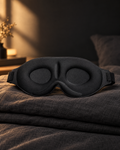
- Sleep loss lowers RMSSD, so a regular sleep schedule with enough sleep protects your HRV.
- Alcohol lowers overnight HRV in a dose-dependent way, even after one drink.
- Slow breathing raised vagally mediated HRV during practice, straight after a session and after multi-session programmes in a review of 223 studies.
- Your age and genetics set part of your range. Aim to raise your own baseline, not to match someone else's.
Can you actually improve your HRV?
Yes, within limits. Heart rate variability (HRV) reflects how much the rest and recover side of your nervous system is influencing your heart. Some of what sets your number is fixed: HRV falls with age and varies a lot between healthy people of the same age, as our HRV by age chart shows. But a good share of the night-to-night and month-to-month variation comes from things you control: how much you move, how you sleep, what you drink and how you handle stress.
It also helps to separate two goals. One is stopping the things that push HRV down, such as heavy drinking, short nights and stacked hard training. The other is building habits that raise your baseline over time. The first gives quicker results. The second takes patience. If your HRV has fallen recently and you want to find out why, start with our guide to why your HRV dropped.
Does exercise improve HRV?
Regular exercise has the best evidence of any habit. A 2024 systematic review and meta-analysis of 16 randomised controlled trials, covering 623 healthy adults, found that exercise training improved RMSSD, SDNN and high-frequency power compared with control groups. RMSSD and high-frequency power both track the rest and recover branch of the nervous system. The authors also found that age, sex and the type of exercise may influence how big the effect is.
How much exercise do you need?
There is no proven HRV-specific dose, so a sensible target is the general guidance. The NHS physical activity guidelines (UK guidance, broadly similar to advice in many other countries) suggest adults aim for at least 150 minutes of moderate intensity activity or 75 minutes of vigorous activity a week, spread over 4 to 5 days or every day, plus strength work on at least 2 days.
For HRV, a few practical points:
- Make most of it easy. Moderate aerobic work you can talk through, such as brisk walking, cycling or easy running, can be repeated often without crushing your recovery.
- Build gradually. Jumping straight into daily hard sessions tends to lower HRV for days at a time.
- Balance hard and easy days. A hard session will dip your HRV for a night or two. That is normal. Stacking hard days without recovery keeps it down.
- Be consistent. Three or four sessions every week for months matters more than one heroic fortnight.
If you train hard, a readiness score that weighs your HRV against your baseline can help you decide when to push and when to back off. Our guide to readiness scores explains how they work.
How does sleep affect HRV?
Sleep is when your nervous system does most of its recovering, and losing it shows up quickly. A 2025 meta-analysis of 11 randomised trials with 549 participants found that sleep deprivation significantly lowered RMSSD and shifted the balance towards the fight or flight side of the nervous system.
The fix is not complicated, but it does take discipline:
- Get up at the same time every day, including weekends. The NHS advice on insomnia lists this among its core habits for better sleep.
- Give yourself enough time in bed for 7 to 9 hours of sleep, the range most health bodies recommend for adults.
- Keep the bedroom dark and quiet, and wind down for an hour before bed.
- Avoid tea, coffee and alcohol in the hours before bed. The NHS suggests at least 6 hours.
- Do not sleep in after a bad night. Stick to your usual wake time and let the next night catch up.
How much does alcohol affect HRV?
More than most people expect. In a study of 4,098 Finnish employees, Pietilä and colleagues compared each person's nights with and without alcohol. During the first three hours of sleep, RMSSD fell by an average of 2.0 ms after a low intake, 5.7 ms after a moderate intake and 12.9 ms after a high intake. Heart rate rose, and recovery measures fell, even in the low-intake group, which was mostly people who had one drink. Regular exercise and youth did not protect against the effect.
Cutting back is one of the fastest ways to see your overnight numbers improve. If you do drink, drinking less and earlier in the evening is better for your night than a late session.
Does slow breathing raise HRV?
Yes, and it is free. A large systematic review and meta-analysis by Laborde and colleagues, which included 223 studies, found that voluntary slow breathing increased vagally mediated HRV during the breathing session, immediately after a single session and after multi-session programmes. The authors describe it as a low-tech, low-cost technique with few adverse effects expected.
A simple way to start is the NHS breathing exercise for stress:
- Sit, stand or lie somewhere comfortable, feet roughly hip-width apart.
- Breathe in gently through your nose, letting the breath flow down into your belly, counting steadily from 1 to 5 if that helps.
- Let it flow out gently through your mouth, counting from 1 to 5 again.
- Repeat for at least 5 minutes.
A count of five in and five out works out at about six breaths a minute, which is slower than most people breathe at rest. The NHS notes that you get the most benefit from doing it regularly, as part of your daily routine. Do not force your breath, and stop if you feel light-headed.
Can reducing stress improve HRV?
Stress and HRV are closely linked. A review of 37 studies by Kim and colleagues found that HRV changed in response to psychological stress in most of them, most often through reduced parasympathetic activity. It follows that whatever genuinely lowers your stress is likely to help your HRV too.
What works differs from person to person. Common options include:
- walking or time outdoors
- regular slow breathing, as above
- clear breaks from work and screens in the evening
- time with people you like
- talking to someone, or getting professional support if stress or low mood is affecting your daily life
What about supplements and quick fixes?
This guide leaves supplements out on purpose. The habits above have the clearest evidence, cost little and help your sleep and fitness as well as your HRV. If you are thinking about any supplement or product that claims to raise HRV, speak to a doctor or pharmacist first, particularly if you take other medicines.
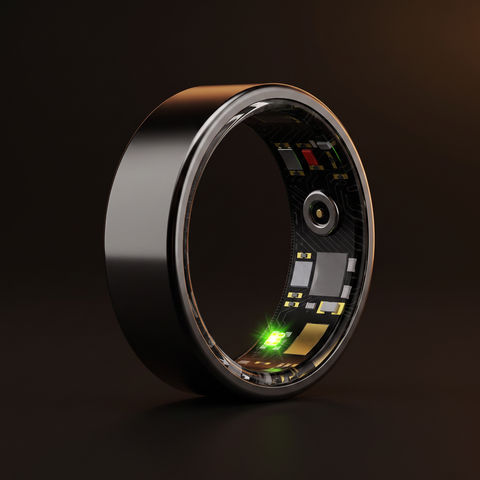
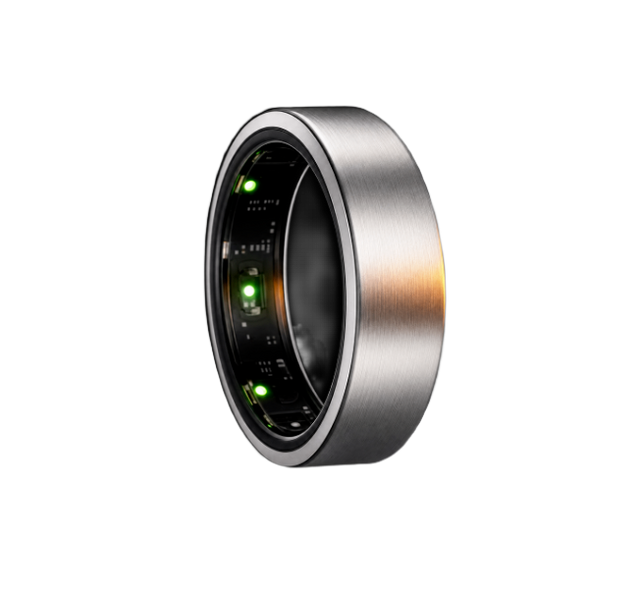
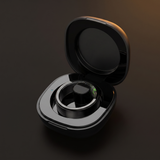
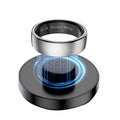
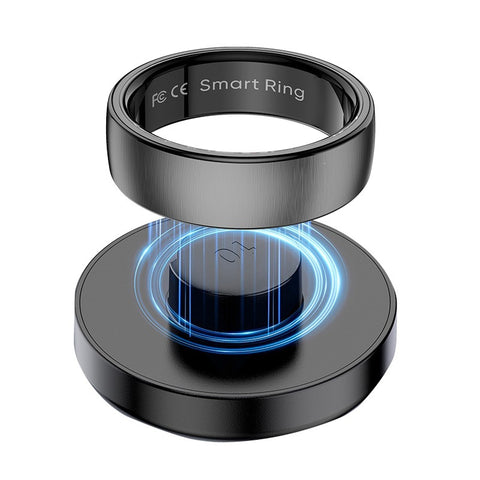
PulseRing Pro reads your HRV, resting heart rate and sleep overnight from your finger, then builds your personal baseline over roughly two weeks. That baseline is what lets you see whether your new habits are working. Each morning you get one readiness score and one plain sentence: push, maintain or rest. No subscription, every metric included for £89.
How long does it take to improve HRV?
Removing a negative, such as heavy drinking or short nights, can show up within days. Building a higher baseline through fitness takes weeks to months of consistent training. Track it properly so you do not chase noise:
- Measure the same way every time. Overnight readings are the most consistent.
- Look at a weekly average, not single mornings.
- Compare this month with last month, not today with yesterday.
- Expect ups and downs. Life, training and illness all move the line.
Not sure where your number sits? Our guide to what a good HRV is explains normal ranges and why your own trend matters most.
When should you talk to a doctor?
Low HRV on a wearable is not a diagnosis, and a consumer ring cannot tell you whether you have a heart condition. Speak to your GP or doctor before starting a new exercise plan if you have not exercised for some time or have a medical condition. Get medical advice promptly if you have chest pain, fainting, breathlessness, or palpitations that keep coming back, and call 999 (or your local emergency number) if symptoms are severe.
Frequently asked questions
What is the fastest way to improve HRV?
The quickest gains usually come from removing what pushes HRV down: cutting back on alcohol, getting enough sleep at regular times and not stacking hard training days. These can show up in your overnight numbers within days. Raising your baseline through aerobic fitness takes longer, typically weeks to months of consistent exercise.
What type of exercise is best for HRV?
Regular aerobic exercise has the strongest support, and a meta-analysis of 16 trials in healthy adults found exercise training raised RMSSD. Most of your training should be easy enough to repeat often, such as brisk walking, cycling or steady running. Include strength work as general guidance recommends, and balance hard days with easy ones.
Does breathing exercise improve HRV?
Yes. A review of 223 studies found that slow breathing raised vagally mediated HRV during practice, straight after a session and after programmes lasting several sessions. A simple method is breathing in for a count of five and out for a count of five, for at least five minutes a day. Stop if you feel dizzy or light-headed.
Does drinking less alcohol improve HRV?
Yes. A study of 4,098 people found alcohol lowered overnight RMSSD in a dose-dependent way, by about 2 ms after a low intake and 12.9 ms after a high intake, during the first three hours of sleep. Even one drink had a measurable effect. Drinking less, and earlier in the evening, is one of the quickest ways to improve your overnight numbers.
Can you improve HRV as you get older?
HRV naturally falls with age, so the aim is to raise your own baseline rather than match a younger person. Exercise training improved HRV measures across healthy adults in research, and the basics of good sleep, less alcohol and stress management help at any age. Check with your doctor before starting a new exercise plan if you have a medical condition.
Sources
- Effects of exercise training on heart rate variability in healthy adults: a systematic review and meta-analysis of randomized controlled trials, Amekran and El Hangouche, Cureus, 2024
- Physical activity guidelines for adults aged 19 to 64, NHS, 2024
- Effects of sleep deprivation on heart rate variability: a systematic review and meta-analysis, Zhang et al., Frontiers in Neurology, 2025
- Insomnia, NHS
- Acute effect of alcohol intake on cardiovascular autonomic regulation during the first hours of sleep, Pietilä et al., JMIR Mental Health, 2018
- Effects of voluntary slow breathing on heart rate and heart rate variability: a systematic review and a meta-analysis, Laborde et al., Neuroscience and Biobehavioral Reviews, 2022
- Breathing exercises for stress, NHS, 2026
- Stress and heart rate variability: a meta-analysis and review of the literature, Kim et al., Psychiatry Investigation, 2018
This article is for general information and is not medical advice. PulseRing Pro is a wellness device, not a medical device, and does not diagnose or treat any condition. If you are worried about your health, speak to your GP or a qualified clinician.