









Most adults spend about 10% to 20% of their sleep in deep sleep, which works out at roughly 40 to 110 minutes over 7 to 9 hours. There is no agreed target. Deep sleep falls with age, women tend to get more than men, and if you wake up feeling rested most days, your amount is probably fine.
Below: typical amounts, how they change with age, why trackers and sleep labs disagree, and when to see a doctor.
Key takeaways
- The Sleep Foundation puts deep sleep at 10% to 20% of the night. Some sources say 25%, which is why figures online range from 40 minutes to two hours.
- Age changes deep sleep most. In one lab study of healthy men it fell from about 19% of the night at 16 to 25 to about 3% at 36 to 50.
- In a large community study, women had about twice as much slow-wave sleep as men.
- Most deep sleep comes early in the night, so a very late bedtime costs you more of it than an early alarm.
- Wearables estimate deep sleep from heart rate and movement. Use the trend over weeks, not one night.
What counts as deep sleep?
Deep sleep is stage N3 of non-REM sleep, also called slow-wave sleep after the large, slow brain waves seen on a sleep study. The US National Heart, Lung, and Blood Institute (NHLBI) says you usually spend more time in it early in the night. Our guide to sleep stages explains all four stages; this article is about amounts.
Is dream sleep the same as deep sleep?
No. The NHLBI says dreaming usually happens during REM sleep, when brain activity is similar to when you are awake. Deep sleep is the opposite, with the slowest brain waves of the night. On a tracker they are two separate numbers.
How much deep sleep do you need a night?
There is no single agreed figure, and the pages at the top of Google do not agree with each other. The Sleep Foundation says deep sleep makes up 10% to 20% of total sleep for most adults, and that there is no consensus on how much is normal or ideal. The Cleveland Clinic says about 25%.
Because deep sleep is a share of your night, the minutes depend on how long you sleep:
| Total sleep | At 10% | At 20% | At 25% |
|---|---|---|---|
| 6 hours | 36 minutes | 72 minutes | 90 minutes |
| 7 hours | 42 minutes | 84 minutes | 105 minutes |
| 8 hours | 48 minutes | 96 minutes | 120 minutes |
| 9 hours | 54 minutes | 108 minutes | 135 minutes |
A short night gives you fewer minutes even if the share is normal, so check total sleep first: the NHS says adults need 7 to 9 hours. And a page that says you "should" get 105 or 120 minutes treats the top of the range as a minimum. From middle age especially, many healthy adults get less.
Is 1 hour of deep sleep enough?
For many adults, yes. An hour sits inside the Sleep Foundation's range for 7 to 9 hours of sleep. Pages that call 45 minutes too little assume 25%. On the 10% to 20% range it is low for a 7 hour night but not outside it. The better test is how you feel during the day, and whether the number has changed from your usual.
How much deep sleep is normal by age?
Most pages stop at "it goes down as you get older". The research is more specific, and it does not all agree:
| Age | What the evidence shows | Source |
|---|---|---|
| Early childhood | Slow-wave sleep is at its peak | NHLBI |
| Teenage years | Slow-wave sleep drops sharply | NHLBI |
| 16 to 25 | About 19% of the night (18.9%) in healthy men | Van Cauter 2000 |
| 36 to 50 | About 3% of the night (3.4%), replaced by lighter sleep | Van Cauter 2000 |
| 71 to 83 | No further significant fall from midlife | Van Cauter 2000 |
| Adults generally | The share falls with age, but only sleep efficiency kept falling significantly after 60 | Ohayon 2004 |
| Healthy adults, modern scoring | No significant change in the share of N3 with age | Boulos 2019 |
| Older adults | Some may have no slow-wave sleep at all | NHLBI |
The 2000 JAMA study by Van Cauter and colleagues pooled lab recordings from 149 healthy men aged 16 to 83. Most of the fall came between early adulthood and midlife, not in old age. It studied men only.
The 2004 meta-analysis by Ohayon and colleagues, covering 65 studies and 3,577 people aged 5 to 102, found the share of slow-wave sleep fell with age, but that the size of the effect depended on how carefully volunteers were screened for health problems, medicines, alcohol and sleep disorders. The 2019 meta-analysis by Boulos and colleagues pooled 169 studies of 5,273 healthy adults scored to the 2007 or 2012 American Academy of Sleep Medicine rules. It found total sleep fell by about 10 minutes per decade of age, but the change in the share of N3 was not significant.
Differences in who was studied and how sleep was scored may explain part of the gap. Either way, a chart for another age tells you little. A slow drift over years is expected; a sudden change over a few weeks deserves a closer look.
Do women get more deep sleep than men?
On average, yes. A Sleep Heart Health Study analysis by Redline and colleagues of 2,685 people aged 37 to 92 found women had on average 106% more slow-wave sleep than men, roughly double. Men, but not women, showed clear signs of poorer sleep with age.
Why does most deep sleep come early in the night?
The Cleveland Clinic says one sleep cycle takes about 90 to 120 minutes, and most people go through four or five a night. Deep sleep fills much of the first cycles, while REM grows towards morning. The Sleep Foundation says you get the most deep sleep early in the night. That has two practical effects:
- Bedtime matters. A very late night, or lying awake for the first hours, eats into the cycles richest in deep sleep.
- An early alarm mostly costs REM. The NHLBI says you usually have more REM later in the night.
What does "enough" deep sleep actually mean?
Because there is no agreed number, the Sleep Foundation suggests focusing on how you feel in the morning and through the day. Three questions tell you more than any single figure:
- Are you sleeping 7 to 9 hours? If not, fix total sleep first.
- Do you usually wake up rested? If yes, a lower-than-expected tracker number is no reason to worry.
- Has your own figure changed? A drop lasting several weeks against your own normal range matters more than a population average.
Why does my tracker's deep sleep differ from a sleep lab?
A sleep lab uses polysomnography, which records brain waves, eye movements and muscle activity. Deep sleep is defined by those brain waves, so this is the reference. A ring or watch cannot read brain waves. It estimates stages from signals such as heart rate, heart rate variability and movement.
A 2021 study in the journal Sleep by Chinoy and colleagues tested seven consumer devices against polysomnography in 34 healthy young adults. Most were good at telling sleep from wake, but their sleep stage results were mixed, and they did worse on disrupted nights. A study of an early Oura ring by de Zambotti and colleagues found it underestimated N3 by about 20 minutes compared with the lab. Brands also label stages differently. Our guide to choosing a sleep tracker covers what each type measures well and badly.
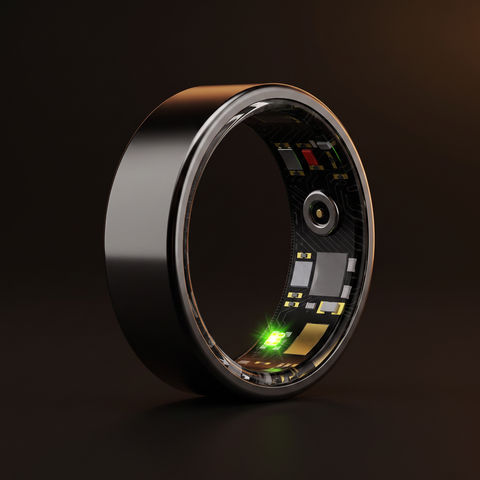
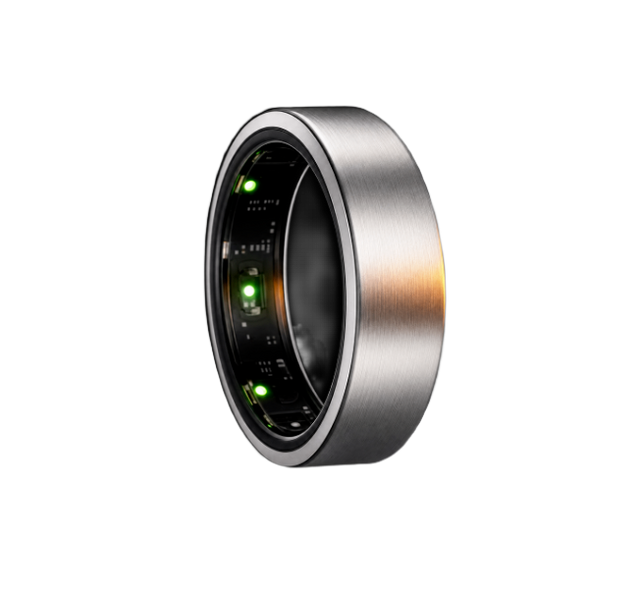
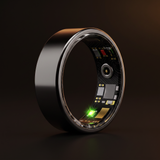
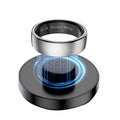
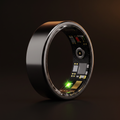
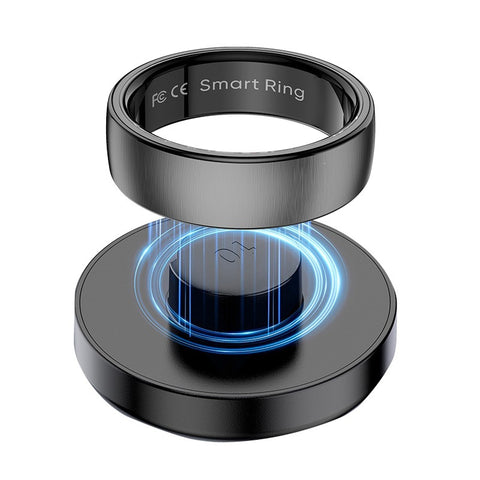
PulseRing Pro works the same way: it estimates deep sleep from your pulse and movement at the finger, alongside light and REM sleep, heart rate, HRV and blood oxygen, and shows the trend over weeks. It is not a sleep study and does not diagnose anything. If you are weighing up a ring for sleep, start with our sleep ring page.
Signs you might be short on deep sleep, and what to do
The Sleep Foundation says that without enough deep sleep, even a full night can leave you groggy and unrefreshed, with reduced alertness, trouble learning and remembering, and irritability. These overlap with plain short sleep, so they prove nothing on their own. If they sound familiar:
- Check total sleep and timing. A regular wake-up time and 7 to 9 hours protect the early cycles.
- Work through the habits with the best evidence. Our guide to how to get more deep sleep covers nine, from caffeine timing to evening exercise.
- Change one thing at a time. A 14-night sleep experiment compares a normal week with a week of one change.
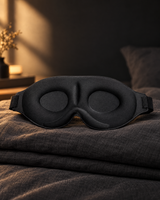
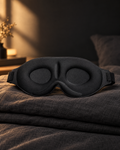
- Look at the bedroom and your breathing. The Sleep Reset System pairs the ring with a blackout mask, mouth tape and nasal strips so you can test those changes one by one. Mouth tape is not for anyone with a blocked nose, breathing problems or suspected sleep apnoea.
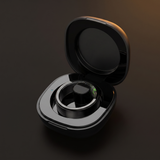
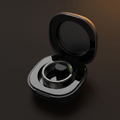
Want to know whether a change is helping? The Sleep Reset System brings together PulseRing Pro, the Peak Blackout contoured sleep mask, Peak Mouth Tape (30 nights) and Peak Airflow nasal strips (30 nights) for £129. The ring builds your personal baseline over about two weeks, then shows whether your estimated deep sleep, heart rate and HRV move when you change one thing. No subscription.
When should you see a GP or doctor?
A low tracker figure is not a diagnosis. This is UK guidance from the NHS; elsewhere, speak to your own doctor.
- Ongoing poor sleep. The NHS insomnia page says to see a GP if changing your sleeping habits has not helped, you have had trouble sleeping for months, or it makes daily life hard to cope with.
- Signs of sleep apnoea. The NHS sleep apnoea page says to see a GP if your breathing stops and starts while you sleep, you make gasping, snorting or choking noises, or you always feel very tired during the day. Bring a partner who has seen the symptoms if you can.
- Sleepiness and driving. Do not drive when you feel sleepy. In the UK, you may need to tell the DVLA about sleep apnoea. Our guide to the Epworth Sleepiness Scale explains how doctors gauge daytime sleepiness.
Frequently asked questions
How much deep sleep should I get a night?
For most adults, about 10% to 20% of total sleep, roughly 40 to 110 minutes over 7 to 9 hours, according to the Sleep Foundation. Some sources quote up to 25%. There is no agreed target and deep sleep falls with age, so if you usually wake up rested, your amount is probably fine.
What percentage of sleep should be deep sleep?
Most sources give 10% to 25% for adults: the Sleep Foundation says 10% to 20%, the Cleveland Clinic about 25%. Age matters a lot. One lab study of healthy men found about 19% at 16 to 25 and about 3% at 36 to 50. Compare your figure with your own usual range.
Is 45 minutes of deep sleep enough?
It can be. Over a 7 hour night, 45 minutes is about 11% of your sleep, at the low end of the Sleep Foundation's 10% to 20% range but inside it, and it may be typical from middle age. Look at your average over a few weeks and at how you feel during the day.
Is dream sleep deep sleep?
No. Dreaming usually happens during REM sleep, when your brain is almost as active as when you are awake. Deep sleep, or N3, is a separate non-REM stage with the slowest brain waves of the night. Deep sleep comes mostly in the first half of the night and REM mostly in the second.
Does deep sleep decrease with age?
Usually, yes. Slow-wave sleep peaks in early childhood and drops sharply in the teenage years. In one study of healthy men, most of the adult fall came between the early 20s and midlife. A 2019 meta-analysis of healthy adults scored to modern rules found no significant change in the share, so findings vary.
Why does my tracker show so little deep sleep?
Short or late nights, age, sex, alcohol, caffeine or a warm bedroom can all play a part. So can the tracker: rings and watches estimate stages from heart rate and movement, and one study found an early ring underestimated deep sleep by about 20 minutes against a sleep lab. Watch the trend and how you feel.
Sources
- How Much Deep Sleep Do You Need?, Sleep Foundation, 2025
- How Sleep Works: Sleep Phases and Stages, NHLBI (NIH), 2022
- Sleep: What It Is, Why It's Important, Stages, REM and NREM, Cleveland Clinic
- Van Cauter E et al. Age-related changes in slow wave sleep and REM sleep in healthy men, JAMA, 2000
- Ohayon MM et al. Meta-analysis of quantitative sleep parameters from childhood to old age, Sleep, 2004
- Boulos MI et al. Normal polysomnography parameters in healthy adults, The Lancet Respiratory Medicine, 2019
- Redline S et al. The effects of age, sex, ethnicity, and sleep-disordered breathing on sleep architecture, Archives of Internal Medicine, 2004
- Chinoy ED et al. Performance of seven consumer sleep-tracking devices compared with polysomnography, Sleep, 2021
- de Zambotti M et al. The Sleep of the Ring: Comparison of the OURA Sleep Tracker Against Polysomnography, Behavioral Sleep Medicine, 2019
- Insomnia, NHS, 2026
- Sleep apnoea, NHS, 2026
This article is for general information and is not medical advice. PulseRing Pro is a wellness device, not a medical device, and does not diagnose or treat any condition. If you are worried about your health, speak to your GP or a qualified clinician.