
















Zone 2 training: what it is and how to find your heart rate zone
What zone 2 is, three ways to work out your heart rate zones with worked examples, how long sessions should be, and an honest look at what the research says.

In this article
Zone 2 training is steady, easy aerobic exercise. Most five-zone charts put it at 60% to 70% of your maximum heart rate. At that effort you can still talk in full sentences. Scientists define it more precisely as effort below your lactate threshold. It builds an aerobic base, but it is not the only intensity that matters.
This guide covers three common ways to set your zones, with worked numbers. It also covers where each method goes wrong, how long sessions should be, and what the research says.
Key takeaways
- Zone 2 is usually set at 60% to 70% of maximum heart rate. In the lab it means exercise below the lactate threshold.
- Three everyday ways to find it: percentage of maximum heart rate, heart rate reserve (Karvonen) and the talk test. They give different numbers.
- Age formulas for maximum heart rate are averages. Your real maximum can sit well above or below the estimate.
- A 2025 review found no good evidence that zone 2 is the best intensity for health. With limited time, some harder work matters too.
- Use the numbers as a guide and check them against how the effort feels.
What is zone 2 training?
Heart rate zones split your effort into bands between rest and flat out. There are usually five, each set as a percentage of maximum heart rate. Zone 2 is easy enough to keep going for a long time. It is hard enough that you breathe a little more than usual.
A zone 2 workout is any steady session held in that band. Think brisk uphill walking, easy cycling, an easy jog, rowing or swimming.
The five-zone model used by Cleveland Clinic and Harvard Health looks like this:
| Zone | % of maximum heart rate | How it feels |
|---|---|---|
| Zone 1 | 50% to 60% | Very easy. Conversation is effortless. Warm-ups, cool-downs, recovery walks. |
| Zone 2 | 60% to 70% | Easy and steady. You can talk, with the odd pause for breath. |
| Zone 3 | 70% to 80% | Comfortably hard. Breathing deepens and chat drops off. |
| Zone 4 | 80% to 90% | Hard. Talking takes real effort. |
| Zone 5 | 90% to 100% | Maximal. You are focused on breathing, not talking. |
Researchers tend to describe zone 2 differently. A 2025 review in Sports Medicine by Storoschuk and colleagues defines it as low-intensity exercise below the lactate threshold. That is the point where lactate builds up in the blood faster than your body clears it. It is the more accurate definition, but you need a lab test to measure it. The heart rate percentages above are a stand-in.
How do you work out your heart rate zones?
There are three practical methods, and each gives a slightly different answer.
Method 1: percentage of maximum heart rate
This is the simplest. You estimate your maximum heart rate, then take 60% and 70% of it.
The classic estimate is 220 minus your age. The British Heart Foundation uses it in its advice. A newer formula from Tanaka, Monahan and Seals (2001) is 208 minus 0.7 times your age. The authors found that the older formula underestimates maximum heart rate in older adults.
Here is how the two compare:
- Age 40: 220 minus 40 gives 180. Tanaka gives 208 minus 28, which is also 180. Zone 2 is 108 bpm to 126 bpm either way.
- Age 60: 220 minus 60 gives 160, so zone 2 is 96 bpm to 112 bpm.
- Tanaka gives 208 minus 42, which is 166. Zone 2 then comes out at roughly 100 bpm to 116 bpm.
For younger adults the two formulas barely differ. From middle age onwards they drift apart.
Method 2: heart rate reserve (the Karvonen method)
The Karvonen method, named after the researcher Martti Karvonen, adds your resting heart rate to the sum. Harvard Health calls it more personalised, because it accounts for your fitness. Our guide to normal resting heart rate explains how to measure that number properly.
- Work out your heart rate reserve: maximum heart rate minus resting heart rate.
- Multiply the reserve by the percentage you want.
- Add your resting heart rate back on.
Take a 40-year-old with a maximum of 180 and a resting heart rate of 60. The reserve is 120. At 60%, that is 72 plus 60, which gives 132. At 70%, it is 84 plus 60, which gives 144.
So the same band lands at 132 bpm to 144 bpm. That is noticeably higher than the 108 bpm to 126 bpm from Method 1.
That gap causes most of the confusion around zone 2. A percentage of reserve is not a percentage of maximum. Apps, coaches and calculators also use different cut-offs. Check which method a number comes from before comparing it.
Method 3: the talk test
The talk test needs no maths at all. The NHS describes moderate activity as a level where you can still talk but not sing. Vigorous activity is where you cannot say more than a few words without pausing for breath. Harvard Health uses a similar ladder, from singing at low effort to gasping at maximal effort.
For zone 2, aim for the lower end of moderate. You could hold a conversation in full sentences, but you would notice your breathing. If you can only get out short phrases, you have drifted into zone 3 or higher.
Comparing the methods
| Method | What you need | Strength | Weakness |
|---|---|---|---|
| % of maximum heart rate | Your age | Quick and widely used | Your real maximum may be well away from the formula |
| Heart rate reserve (Karvonen) | Age plus a reliable resting heart rate | Accounts for fitness through resting heart rate | Still relies on an estimated maximum |
| Talk test | Nothing | Responds to how you feel on the day | Subjective, and easy to push too hard in company |
| Lab lactate or gas test | A sports science lab | Measures your own thresholds directly | Costs money and is not practical for most people |
Why your heart rate zones might be wrong
Every formula-based zone rests on an estimate of maximum heart rate. Estimates describe groups, not individuals.
Age formulas miss for some people. A 2018 study of 180 recreational marathon runners appeared in Frontiers in Physiology. In women, both 220 minus age and Tanaka overestimated measured maximum heart rate by about 5 bpm. In men, Tanaka matched well, while 220 minus age underestimated by about 3 beats.
The same percentage can also mean different things for different people. A 2025 study by Meixner and colleagues compared seven common zone 2 markers in the same athletes. Fixed percentages of maximum heart rate showed wide individual differences. The authors called for more personalised approaches.
A study of 972 treadmill tests in people with heart disease found the same pattern. It was published in BMJ Open Sport and Exercise Medicine. The same relative intensity fell into different intensity domains for different people. That group was cardiac patients, not healthy exercisers. The principle still holds: a percentage is a rough proxy for your own thresholds.
Finally, some people should not rely on standard zones at all. The British Heart Foundation advises anyone with heart or circulatory disease to check first. Ask your doctor or nurse what heart rate to aim for before exercising.
Is zone 2 training worth it? What the evidence says
Zone 2 became popular because elite endurance athletes do a lot of it. The 2025 Sports Medicine review traces much of the enthusiasm to observational data on athletes. Those athletes train many hours a week.
The authors looked at the evidence on mitochondrial and fat-burning capacity. They concluded that current research does not support zone 2 as the optimal intensity for most people. They argue that higher intensities matter for cardiometabolic health, especially when training time is limited.
That does not make easy aerobic work pointless. Cleveland Clinic describes zone 2 as a good way to build endurance with lower strain on the body. It also notes that harder zones bring extra benefits. Harvard Health makes the same practical point: the best plan is one you will keep doing.
For context, the NHS recommends at least 150 minutes of moderate activity or 75 minutes of vigorous activity a week. It also advises strength work on at least two days. Zone 2 sessions count towards the moderate total.
A fair summary: zone 2 is a useful, low-risk way to add training volume. It does not replace every other intensity. If you only have three or four hours a week, some of that time should be harder.
Does zone 2 burn fat?
Your body burns a mix of fat and carbohydrate at every intensity. Zone 2 is often sold as the fat-burning zone. The Storoschuk review found no evidence that it is the best intensity for improving your capacity to burn fat. If fat loss is your goal, treat zone 2 as one useful option, not a special fat-burning setting.
What are the downsides of zone 2 training?
- It takes time. Easy sessions need to be longer to add up to a meaningful weekly total.
- Formula zones can be wrong for you, so you may train too hard or too easy.
- On its own, it may leave health benefits on the table if you skip harder work.
- Holding a strict heart rate cap can mean walking hills, which some people find frustrating at first.
How long should a zone 2 session be?
No study sets a minimum session length for zone 2. A practical frame is the NHS target of 150 minutes of moderate activity a week. Five 30-minute sessions reach it. So do three 50-minute sessions.
If you are new to steady exercise, start with sessions you can repeat comfortably. Add time gradually over several weeks rather than all at once.
How to start zone 2 training: a simple approach
- Pick one method and stick with it. If you know your resting heart rate, heart rate reserve is a sensible choice. If not, use a percentage of maximum.
- Check the numbers against the talk test on your first few sessions.
- If your "zone 2" leaves you unable to speak in sentences, your estimated maximum is probably too high. If it feels like a stroll, it may be too low.
- Choose steady activities: brisk walking uphill, easy cycling, swimming, rowing or an easy jog. Walking breaks are fine if your heart rate climbs.
- Keep at least one harder session in your week if you are healthy and cleared to exercise.
- Decide each morning whether today is a push, maintain or rest day. Base it on how you slept and how you feel, not on a plan alone.
That last step is where recovery data helps. Heart rate variability (HRV) and resting heart rate tend to reflect how well you are recovering. Both are easier to read as a trend than as a single number. Our guide to readiness scores explains how that morning call works. What is a good HRV covers the numbers behind it.
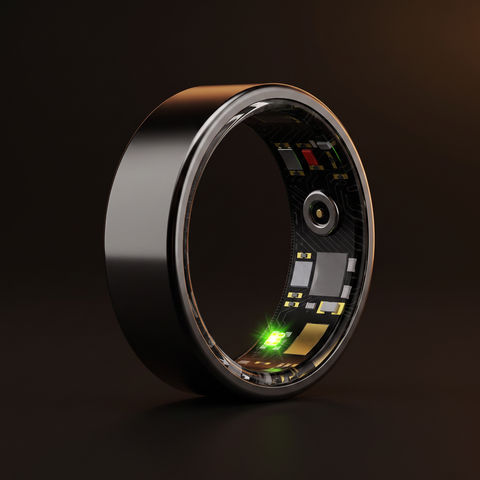
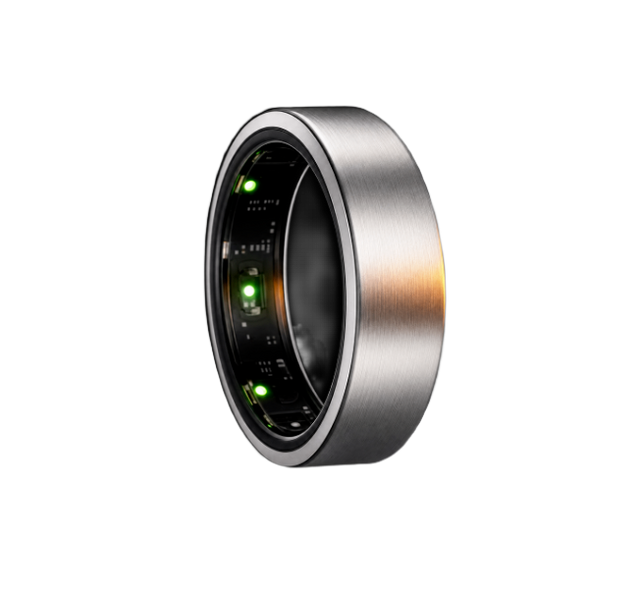
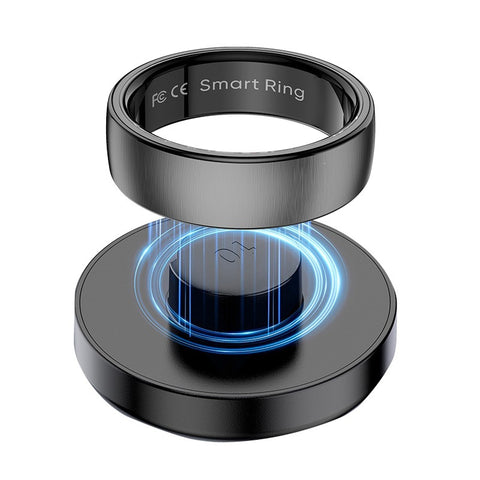
PulseRing Pro reads your heart rate, HRV, blood oxygen and sleep from a 4-gram titanium ring. Each morning it gives one readiness score and one plain call: push, maintain or rest. It builds a personal baseline over roughly two weeks. Every metric is included in the £89 price, with no subscription.
Want the ring plus a charging case and a protective sleeve for gym sessions? The Peak Starter Kit bundles all three. Compatibility and sizing questions are covered in our smart ring FAQs.
Frequently asked questions
What heart rate is zone 2?
In the common five-zone model, zone 2 is 60% to 70% of your maximum heart rate. For a 40-year-old using 220 minus age, that is about 108 bpm to 126 bpm. Heart rate reserve gives higher numbers, often 130 bpm or more for the same person. Check which method your app or coach uses before comparing figures.
Is 220 minus age accurate for maximum heart rate?
It is a population average, not a measurement. Tanaka and colleagues found it underestimates maximum heart rate in older adults. They proposed 208 minus 0.7 times age instead. A study of marathon runners found both formulas overestimated maximum heart rate in women by about 5 beats. Treat any formula as a starting point.
How do I know I am in zone 2 without a heart rate monitor?
Use the talk test. In zone 2 you should be able to speak in full sentences, though your breathing is quicker than at rest. The NHS describes moderate activity as being able to talk but not sing. If you can only manage a few words at a time, you are working harder than zone 2.
How much zone 2 training should I do each week?
There is no single answer. The NHS recommends at least 150 minutes of moderate activity a week, and zone 2 counts towards that. A 2025 review suggests higher intensities matter for health when time is limited. A mix of easy sessions and one or two harder ones suits most healthy adults.
Does zone 2 actually burn fat?
You burn some fat at every intensity, including zone 2. A 2025 review found no evidence that zone 2 is the best intensity for improving your capacity to burn fat. Treat it as one useful option for fat loss, not a special fat-burning setting.
Sources
- Storoschuk KL et al. Much Ado About Zone 2: a narrative review assessing the efficacy of Zone 2 training, Sports Medicine, 2025
- Meixner B, Filipas L, Holmberg HC, Sperlich B. Zone 2 Intensity: A Critical Comparison of Individual Variability in Different Submaximal Exercise Intensity Boundaries, Translational Sports Medicine, 2025
- Tanaka H, Monahan KD, Seals DR. Age-predicted maximal heart rate revisited, Journal of the American College of Cardiology, 2001
- Nikolaidis PT, Rosemann T, Knechtle B. Age-predicted maximal heart rate in recreational marathon runners, Frontiers in Physiology, 2018
- Milani JGPO et al. Exercise intensity domains determined by heart rate at the ventilatory thresholds in patients with cardiovascular disease, BMJ Open Sport and Exercise Medicine, 2023
- Exercise heart rate zones explained, Cleveland Clinic
- Understanding exercise heart rate zones, Harvard Health Publishing
- What should my heart rate be when I exercise? British Heart Foundation
- Physical activity guidelines for adults aged 19 to 64, NHS
This article is for general information and is not medical advice. PulseRing Pro is a wellness device, not a medical device, and does not diagnose or treat any condition. If you are worried about your health, speak to your GP or a qualified clinician.

How to Lower Resting Heart Rate: What Works and How Long It Takes
What actually lowers your resting heart rate, by how much and how soon, how to tell whether it is working, and when a high or very low heart rate needs a GP or doctor.

WHOOP alternatives with no subscription: rings and bands compared
The main WHOOP alternatives without a membership, from a one-off smart ring to screenless bands, compared with WHOOP on cost, comfort, sleep, recovery and training.

The Best Sleeping Position for Snoring, Back Pain and Reflux
Which sleeping position suits snoring, back and neck pain, acid reflux and pregnancy, what the research really shows, how to train yourself to sleep on your side, and when to se...