










Sleeping Heart Rate by Age: What Is Normal and What to Watch
What a normal sleeping heart rate looks like at each age, taken only from studies that say how they measured it, plus why your heart slows at night, how to read your own tracker and when to see a GP or doctor.

In this article
There is no official sleeping heart rate chart by age. In large studies, healthy adults averaged roughly 56 bpm to 65 bpm (beats per minute) while asleep. That average moved by only a few beats between the twenties and the sixties. Your single lowest minute is lower again, around 50 bpm on average in middle-aged adults. Children run faster.
Below: figures by age from studies that state their method, and why many charts online disagree. Then why your heart slows at night, and when to see a GP or doctor.
Key takeaways
- No health body publishes a sleeping heart rate chart by age. The best figures come from large studies, each measured differently.
- In a study of almost 21,000 wearable users, each age group averaged 56 bpm to 63 bpm asleep. Changes from age 20 to 60 and over were small.
- Women ran about 2 bpm to 5 bpm higher than men in every age group.
- In one large study, the lowest minute averaged around 15 bpm below the night-time average. Check which number your tracker shows.
- See a GP if your heart rate is consistently fast, slow or irregular, especially with faintness or dizziness. Chest pain or breathlessness with a racing heart needs 999.
What is a normal sleeping heart rate?
The British Heart Foundation puts a normal adult resting heart rate at 60 bpm to 100 bpm, measured awake. Our guide to normal resting heart rate covers those daytime ranges in detail. Asleep, the number is lower.
How much lower? The Swedish SCAPIS study is the largest of its kind in healthy middle-aged adults. Heart rate fell by an average of 15 bpm to 16 bpm from day to night, close to a fifth.
A cardiologist writing for the Cleveland Clinic puts a normal sleeping heart rate at roughly 50 bpm to 75 bpm. That fits the research better than the 40 bpm to 60 bpm figure many sites repeat.
Sleeping heart rate by age: what large studies found
Adults aged 20 to 60 and over
A 2026 study in PLOS Digital Health by Grosicki and colleagues covered more than 5.1 million nights. It tracked 20,968 adults wearing a wrist strap.
Method: optical heart rate over the main sleep of each night, leaving out awake and poor-signal periods. Deep sleep and later in the night carried more weight. Values are the mean, with the standard deviation (SD) in brackets.
| Age | Women: sleeping heart rate | Men: sleeping heart rate |
|---|---|---|
| 20 to 29 | 60.7 bpm (SD 7.6) | 56.1 bpm (SD 7.0) |
| 30 to 39 | 61.8 bpm (SD 7.6) | 57.7 bpm (SD 7.3) |
| 40 to 49 | 62.5 bpm (SD 7.9) | 59.1 bpm (SD 7.9) |
| 50 to 59 | 62.4 bpm (SD 7.8) | 59.8 bpm (SD 7.9) |
| 60 and over | 62.7 bpm (SD 7.5) | 59.0 bpm (SD 7.9) |
The average rose by only 2 bpm to 4 bpm across four decades. The spread within each age group was far bigger: roughly 8 bpm either side of the average for about two in three people. Bear in mind these were fitness tracker wearers, likely more active than average.
Adults aged 50 to 65: a clinical reference range
The SCAPIS study gives the closest thing to clinical reference values. It used 24-hour heart monitor recordings in 3,942 healthy Swedish adults aged 50 to 65.
People with heart disease, hypertension, diabetes, sleep apnoea, anaemia or COPD were excluded. So was anyone taking beta blockers. Night-time was the clock window from 10pm to 6am, so it includes some time awake in bed.
| Measure | Women | Men |
|---|---|---|
| Average night-time heart rate | 65 bpm (SD 8) | 63 bpm (SD 9) |
| Middle 95% of night-time averages | 51 bpm to 83 bpm | 48 bpm to 83 bpm |
| Lowest 1-minute heart rate in 24 hours | 51 bpm (SD 7) | 48 bpm (SD 7) |
| Middle 95% of lowest minutes | 39 bpm to 65 bpm | 36 bpm to 63 bpm |
| Average daytime heart rate, for comparison | 81 bpm (SD 8) | 78 bpm (SD 9) |
Heart rate barely changed with age within this band. Common factors such as fitness, smoking and weight explained less than 15% of the differences between people.
Children aged 6 to 11
Archbold and colleagues recorded 470 healthy children in Tucson with in-home sleep studies. Heart rate was averaged over all time scored as sleep. Rates fell with age.
| Age | Average sleeping heart rate |
|---|---|
| 6 | 79.5 bpm (SD 7.6) |
| 7 | 78.0 bpm (SD 8.5) |
| 8 | 75.3 bpm (SD 8.3) |
| 9 | 76.6 bpm (SD 10.8) |
| 10 | 72.8 bpm (SD 9.1) |
| 11 | 73.3 bpm (SD 9.3) |
Girls averaged about 4 bpm faster than boys: 77.6 bpm against 73.6 bpm. We found no study of the same quality for babies and toddlers, so we give no figures. If you are worried about a young child, speak to a GP or health visitor.
Why many sleeping heart rate charts online do not add up
Search for a sleeping heart rate chart and you will find neat bands for every decade. Check the source. One widely copied table is headed average resting heart rate and describes readings taken awake. Others give no source or method, and they disagree. Some show sleeping heart rate rising with age, others falling.
The 40 bpm to 60 bpm adult figure on many pages fits the lowest minutes, not the whole-night average. In SCAPIS, the average lowest minute was 48 bpm to 51 bpm. The night-time average was 63 bpm to 65 bpm.
Why does heart rate drop during sleep?
When you fall asleep, your nervous system shifts. An overnight sleep study by Cabiddu and colleagues describes the pattern. Non-REM sleep shifts you towards the rest and recover (parasympathetic) side. REM sleep shifts you towards the alert (sympathetic) side. Breathing is deeper and more regular in deep sleep.
As the Sleep Foundation explains, heart rate reaches its lowest levels in deep sleep. In REM sleep it can speed up to something close to your waking rate. A healthy night is not a flat line. It dips and rises with your sleep stages.
Is sleeping heart rate the same as resting heart rate?
Not quite. Your daytime resting heart rate is measured awake and still. Sleeping heart rate is usually lower, and wearables report it in different ways:
- Average for the night. Every minute of sleep counts, including REM, so it runs higher.
- Lowest heart rate. The calmest stretch, often in deep sleep, and often well below the average.
- Resting heart rate from sleep. A weighted figure that leans on the calmest periods, as in the wearable study above.
Brands also clean optical data differently. Our HRV by age chart shows how much method changes HRV results, and the same applies here. Compare a number with the same device on other nights, not with a chart built another way.
What raises or lowers your sleeping heart rate?
Age has a small effect. These have bigger ones:
- Fitness. In SCAPIS, people doing at least 2 hours a week of moderate to hard activity ran about 3 bpm lower. That held after allowing for other factors.
- Alcohol. In the 20,968-person study, one drink more than usual, against one fewer, went with a higher sleeping heart rate. It was 2.8 bpm higher in women and 2.4 bpm higher in men.
- Effects were smaller when people drank earlier or slept longer afterwards. See our guide to alcohol and sleep.
- Smoking and weight. In SCAPIS, current smokers ran about 4 bpm higher at night than people who had never smoked. People with a BMI over 30 ran about 3 bpm higher than those under 25.
- Illness. The BHF says heart rate commonly rises with an infection, fever or a virus such as flu or Covid-19.
- Stress, heat and dehydration. The BHF lists these among causes of a fast heart rate, along with anaemia and an overactive thyroid.
- Medicines. Beta blockers slow the heart, and some asthma medicines speed it up. Ask your pharmacist what to expect from yours.
For habits that bring the number down over weeks and months, see how to lower your resting heart rate.
How to read your own sleeping heart rate
Your own pattern tells you more than any chart. A small study by Waldeck and Lambert followed 10 women who exercised regularly over three nights. Each person's lowest sleeping heart rate varied by about 8 bpm from night to night. The authors concluded a change needs to exceed about 10 bpm before you can be confident it is real.
- Wear the same device every night for two weeks to learn your normal range.
- Compare weekly averages, not single nights. One high night after a drink or a poor night is normal.
- Watch for runs of several nights well above your usual with no obvious reason.
- Read it with HRV, and note alcohol, illness, travel and late training alongside it.
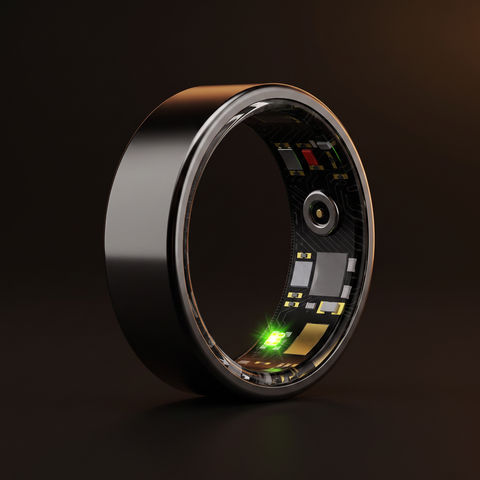
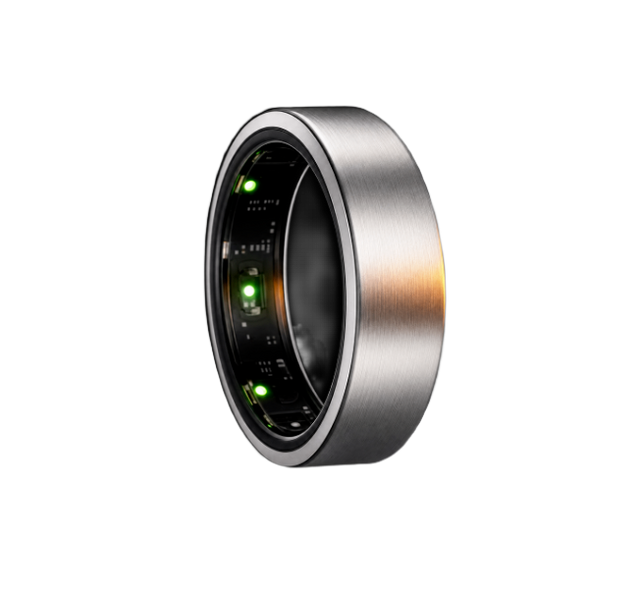
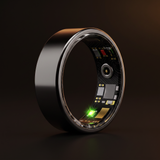
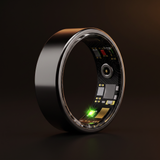
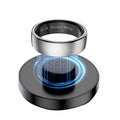
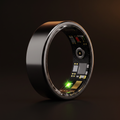
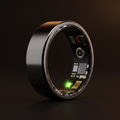
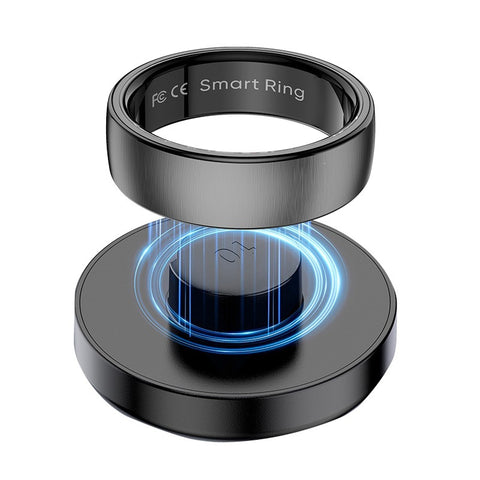
PulseRing Pro reads your heart rate through the night from your finger, alongside HRV, blood oxygen and sleep stages. After about two weeks it knows your baseline, so you can see when your nights run higher than usual. Each morning you get one readiness score and one plain call: push, maintain or rest. It tracks trends. It does not diagnose heart rhythm problems or any other condition. £89, no subscription.
What does sleep apnoea do to heart rate?
A heart rate trace cannot tell you whether you have sleep apnoea. The NHS describes it as breathing that stops and starts while you sleep. Diagnosis needs a sleep study arranged through a GP. Our guide to normal oxygen levels during sleep explains how that test works. If you snore loudly, gasp or choke at night, see a GP whatever your heart rate shows.
When to see a GP about your heart rate at night
How you feel matters more than any single number. Based on NHS and BHF guidance, see a GP, or your own doctor outside the UK, if:
- your heart rate is consistently fast, slow or irregular, especially if you also feel faint or dizzy (BHF)
- you get palpitations that keep coming back or last longer than a few minutes (NHS heart palpitations)
- you have palpitations and a heart condition, or a family history of heart problems
- you think you may have a heart rhythm problem, with symptoms such as breathlessness, lightheadedness or tiredness (NHS arrhythmia)
- your breathing stops and starts while you sleep, or you gasp, snort or choke (NHS sleep apnoea)
- you always feel very tired during the day
The Cleveland Clinic cardiologist treats adult sleeping rates below 40 bpm or above 100 bpm as outside the normal range. But it depends on how you feel: endurance athletes can dip into the 30s and be well. A rate well above 100 bpm asleep may be worth checking even if you feel fine. Readings in the 20s are worth confirming with a doctor.
Call 999 or go to A&E if you have palpitations that do not go away. The same applies to palpitations with chest pain, shortness of breath, or feeling faint or fainting. If those symptoms have stopped, the NHS advises asking your GP surgery for an urgent appointment or calling 111. Outside the UK, use your local emergency number.
Frequently asked questions
What is a normal sleeping heart rate by age?
There is no official chart. In a study of 20,968 wearable users, men averaged 56 bpm to 60 bpm asleep. Women averaged 61 bpm to 63 bpm. That held across age groups from 20 to 60 and over. In healthy adults aged 50 to 65, 95% had night-time averages between about 48 bpm and 83 bpm.
Is a sleeping heart rate of 50 normal?
Often, yes. In healthy adults aged 50 to 65, the lowest minute of the day averaged 48 bpm in men. In women it was 51 bpm. A night-time average of 50 is at the low end of the range. That can be normal in very fit people. If you feel dizzy, faint, breathless or unusually tired, speak to your GP.
Why is my heart rate higher than usual while sleeping?
Common reasons are alcohol, an infection or fever, stress, heat, dehydration and some medicines. In one large study, one extra drink went with a sleeping heart rate 2.4 bpm to 2.8 bpm higher. A rise that settles within a day or two is usually nothing to worry about. If it stays high with no clear reason, see a GP.
Is a sleeping heart rate of 40 too low?
Not always. A Cleveland Clinic cardiologist treats below 40 bpm as outside the normal adult range. But it depends on how you feel. Endurance athletes can dip into the 30s and be healthy. About 1 in 40 healthy men aged 50 to 65 had a lowest minute of 36 bpm or less. Low readings with dizziness, fainting or breathlessness need a GP.
Does heart rate drop during deep sleep?
Yes. In non-REM sleep your nervous system shifts towards rest and recovery. Heart rate usually reaches its lowest level in deep sleep. During REM sleep, when most dreaming happens, it can rise again close to your waking rate. So a healthy night shows dips and rises, not a flat line.
Sources
- Grosicki GJ et al. Real-world effects of alcohol on heart rate, sleep, and physical activity by age and sex, PLOS Digital Health, 2026
- Persson AP et al. Reference ranges for ambulatory heart rate measurements in a middle-aged population, Heart, 2024
- Archbold KH et al. Normative heart rate parameters during sleep for children aged 6 years to 11 years, Journal of Clinical Sleep Medicine, 2010
- Waldeck MR and Lambert MI. Heart rate during sleep: implications for monitoring training status, Journal of Sports Science and Medicine, 2003
- Cabiddu R et al. Modulation of the sympatho-vagal balance during sleep: frequency domain study of heart rate variability and respiration, Frontiers in Physiology, 2012
- Heart rate: what's normal and how to check it, British Heart Foundation, 2026
- Heart palpitations, NHS, 2026
- Heart rhythm problems (arrhythmia), NHS, 2024
- Sleep apnoea, NHS, 2026
- How sleep affects your heart rate, Cleveland Clinic, 2024
- What is a normal sleeping heart rate?, Sleep Foundation, 2026
This article is for general information and is not medical advice. PulseRing Pro is a wellness device, not a medical device, and does not diagnose or treat any condition. If you are worried about your health, speak to your GP or a qualified clinician.

Zone 2 training: what it is and how to find your heart rate zone
What zone 2 is, three ways to work out your heart rate zones with worked examples, how long sessions should be, and an honest look at what the research says.

How to Lower Resting Heart Rate: What Works and How Long It Takes
What actually lowers your resting heart rate, by how much and how soon, how to tell whether it is working, and when a high or very low heart rate needs a GP or doctor.

Tech Neck: What It Is, What the Evidence Says and What Helps
What tech neck really is, why the scary head-weight numbers come from a computer model, what studies of real people found, and the movement, strength, sleep and screen changes t...