







Normal oxygen level during sleep: what your SpO2 numbers mean
Healthy overnight SpO2 ranges from sleep lab data, how low is too low, why wearable readings can be off, and the symptoms that mean you should see a doctor.

In this article
For most healthy adults, a normal oxygen level during sleep is about 95% to 100%. Brief dips into the low 90s can be normal. In a sleep lab study of 350 healthy people, the median overnight reading averaged 96.5%. The lowest reading of the night averaged about 90%. Repeated drops with loud snoring or gasping are worth raising with a GP or doctor.
This guide explains what SpO2 means and what healthy overnight numbers look like. It also covers why wearable readings need care, how sleep apnoea is diagnosed and when to get medical help.
Key takeaways
- SpO2 is the percentage of haemoglobin in your blood that is carrying oxygen. Around 95% to 100% is normal for most healthy people.
- Oxygen dips a little during sleep. In one lab study, healthy people spent about 10% of the night below roughly 95%.
- Older adults tend to run slightly lower at night than younger adults.
- A smart ring gives a wellness estimate. It cannot diagnose sleep apnoea, and a normal reading does not rule it out.
- See a GP if you snore loudly, stop breathing or gasp in your sleep, or feel very tired by day. Call 999 for severe breathing difficulty or blue or grey lips.
What is SpO2?
SpO2 stands for peripheral oxygen saturation. It estimates what percentage of the haemoglobin in your blood is carrying oxygen. A reading of 97% means roughly 97% of your haemoglobin is loaded with oxygen.
It is measured with pulse oximetry. A device shines light through your skin and measures how much is absorbed. Oxygen-rich and oxygen-poor blood absorb light differently. Clip-on pulse oximeters in hospitals and GP surgeries usually go on a finger. The finger is well supplied with blood vessels and gives a good pulse signal. The same reasoning makes a ring a practical place to read SpO2 overnight.
What is a normal oxygen level during sleep?
The Sleep Foundation says normal oxygen levels while sleeping typically range from 95% to 100% for healthy people. It adds that levels normally dip slightly during sleep.
The most useful data on how far healthy people dip comes from a 1996 study in the journal Chest. Researchers reviewed all-night pulse oximetry from 350 people aged 1 month to 85 years. All had normal overnight sleep studies, and periods affected by movement were removed.
| Overnight measure (healthy people) | All ages, average | Over 60s, average |
|---|---|---|
| Median oxygen level across the night | 96.5% | 95.1% |
| Level they spent 10% of the night below | 94.7% | 92.8% |
| Single lowest reading of the night | 90.4% | Not reported separately |
Three points stand out. Most of the night was spent in the mid to high 90s. Short dips into the low 90s happened in healthy people. And people over 60 ran slightly lower than younger adults, even without heart or lung disease. The study found no link between these measures and sex, race or body mass index.
Why does oxygen dip during sleep?
Your breathing changes when you sleep. The Sleep Foundation notes that small dips are normal, particularly in deeper sleep. A dip that lasts a few seconds and recovers is very different from repeated drops through the night. Those can happen when the airway narrows or closes during sleep. To see what happens in each stage of the night, read our guide to sleep stages explained.
What oxygen level during sleep is too low?
There is no single cut-off that suits everyone. People with long-term lung conditions may be told by their own clinicians to expect lower readings. As a general guide, the Sleep Foundation groups readings like this:
- 95% to 100%: normal for most healthy people.
- 91% to 95%: borderline low.
- 88% to 91%: low.
- 88% or below: considered dangerously low for most people.
These bands describe sustained readings. A single brief dip on a wearable, especially while rolling over, is a different thing. Long stretches of the night at that level are what matter. The pattern over the night, and over several nights, tells you far more than one number.
Can a smart ring detect sleep apnoea?
No. A smart ring cannot diagnose sleep apnoea, and neither can any consumer wearable. PulseRing Pro is a wellness device, not a medical device.
The NHS describes sleep apnoea as breathing that stops and starts while you sleep, because the airways become too narrow. The Sleep Foundation notes that oxygen drops in sleep apnoea usually last less than a minute at a time. Oxygen is only part of the picture, which is why diagnosis needs a proper sleep study.
How sleep apnoea is actually diagnosed
According to the NHS, a GP who suspects sleep apnoea refers you to a specialist sleep clinic. You usually wear devices overnight at home that monitor things like your breathing and heartbeat. Sometimes you stay overnight in the clinic.
A full lab sleep study is described in the Cleveland Clinic's guide to polysomnography. It records brain waves, heart rhythm, eye and muscle movement, breathing and blood oxygen together.
The result is an apnoea-hypopnoea index (AHI). That is the number of times per hour your breathing stops or becomes shallow. The NHS grades it as:
| AHI score | What it means |
|---|---|
| 5 to 14 | Mild sleep apnoea |
| 15 to 30 | Moderate sleep apnoea |
| Over 30 | Severe sleep apnoea |
A ring does not measure airflow or breathing effort, so it cannot produce an AHI. Just as important, a normal-looking SpO2 graph does not rule sleep apnoea out. If you have the symptoms, see your GP whatever your ring says.
Why wearable SpO2 readings can be off
Any optical oxygen reading, from a hospital clip to a ring, depends on a clean signal. Things that can throw readings off include:
- Movement: rolling over or clenching your hand can create brief false dips.
- Fit: a loose ring lets light leak in. A ring that is too tight can affect blood flow to the finger.
- Cold hands: reduced blood flow to the fingers weakens the signal.
- Skin tone: the UK government's Equity in Medical Devices review (2024) found pulse oximeters overestimate oxygen levels in people with darker skin.
- The review found the error is greater when oxygen levels are low. It looked at medical devices, but wearables use the same light-based method.
Be clear about one more limit. PulseRing Pro's SpO2 readings have not been independently validated. Use ring SpO2 to spot trends against your own normal, not as a precise measurement. Our guide to sleep trackers covers what consumer devices do well and poorly. If a reading worries you, or you feel unwell, trust your symptoms over the number and get checked.
When should you see a GP about low oxygen or your sleep?
The NHS lists these main signs of sleep apnoea:
- breathing that stops and starts while you sleep
- gasping, snorting or choking noises
- waking up a lot, and loud snoring
- during the day, feeling very tired, struggling to concentrate or waking with headaches
It can be hard to tell on your own. The NHS suggests asking someone to watch you sleep. If they have seen the symptoms, bring them to your GP appointment. If snoring is the main issue, our guide on how to stop snoring sets out the safe order of fixes.
| What you notice | What to do |
|---|---|
| Loud snoring, pauses in breathing, gasping or choking in your sleep, or heavy daytime tiredness | See your GP. Sleep apnoea can be serious if it is not diagnosed and treated. |
| Your ring shows repeated low overnight readings or a clear drop from your usual range, over several nights | Note the dates and any symptoms and discuss them with your GP. Do not self-diagnose from the data. |
| Shortness of breath that is getting worse with normal activities or when lying down | See your GP, as advised by the NHS. |
| Difficulty breathing, more breathless than usual | Contact NHS 111. |
| Severe difficulty breathing, gasping or unable to get words out, a tight or heavy chest, blue or grey lips or skin, or sudden confusion | Call 999 or go to A&E now. |
The urgent signs in the last two rows come from the NHS guidance on shortness of breath. Do not wait for a wearable to confirm them. Outside the UK, use your local emergency number or see your own doctor.
How to use overnight SpO2 data sensibly
- Learn your own range. Give your device a couple of weeks before judging the numbers. PulseRing Pro builds your personal baseline over roughly two weeks of wear.
- Look at the whole night, and several nights. One dip is noise. A pattern is information.
- Check the context. Alcohol, a cold or a blocked nose can all change how you breathe at night. Note them alongside your readings.
- Make sure the ring fits. A snug fit gives the sensors steady contact. Our PulseRing FAQs cover sizing and wear.
- Act on symptoms, not just data. If you or your partner notice signs of sleep apnoea, see your GP even if your readings look normal.
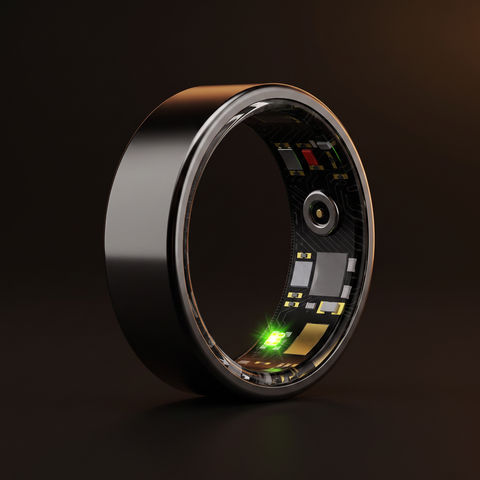
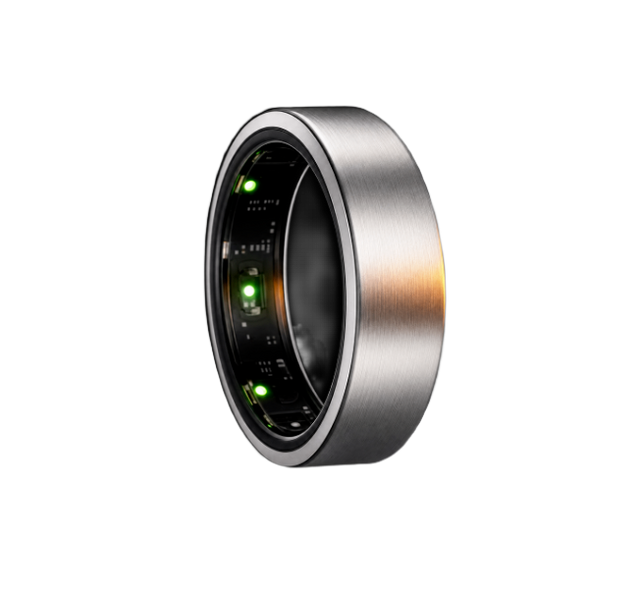
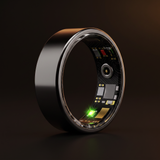
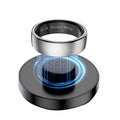
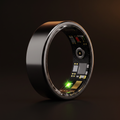
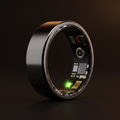
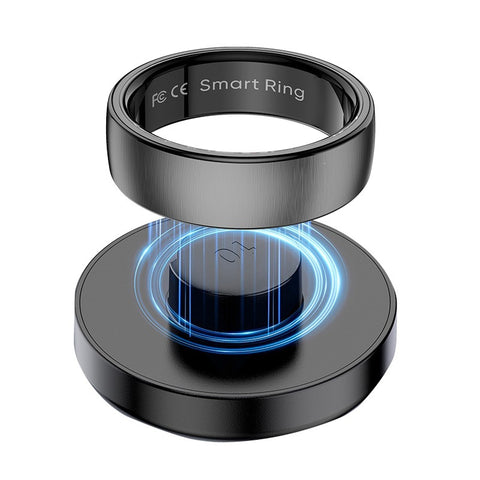
PulseRing Pro has three optical sensors on the inside: two green lights for heart rate and one red light for blood oxygen. It tracks SpO2 overnight alongside sleep stages, heart rate and HRV. Each morning it gives one readiness score and one plain call: push, maintain or rest. There is no subscription, and every metric is included in the one-off price of £89.
Frequently asked questions
What is a normal oxygen level while sleeping?
For most healthy adults, it is about 95% to 100%. Small dips during the night are normal. In a study of 350 healthy people, the median overnight level averaged 96.5%. The lowest reading averaged about 90%. Older adults tend to run slightly lower. People with lung conditions should ask their own clinician what range to expect.
Is 90% oxygen while sleeping normal?
A brief dip to around 90% can happen in healthy people. In one sleep lab study, the lowest reading of the night averaged about 90% in people with normal sleep studies. Long stretches at 90% or below are different and not typical. With repeated low readings, loud snoring or pauses in breathing, speak to your GP.
Can a smart ring tell if I have sleep apnoea?
No. A smart ring is a wellness device and cannot diagnose sleep apnoea. Diagnosis needs a sleep study arranged through your GP. It measures your breathing as well as your oxygen, and produces an apnoea-hypopnoea index. A normal-looking ring reading does not rule sleep apnoea out, so see your GP if you have the symptoms.
What oxygen level is dangerous during sleep?
The Sleep Foundation describes levels at or below 88% as dangerously low for most people. The right range varies with health conditions, so do not rely on a wearable to decide. Call 999 or go to A&E for severe difficulty breathing or a tight, heavy chest. The same goes for blue or grey lips or skin, or sudden confusion.
Why does my blood oxygen drop at night?
Breathing changes during sleep, so small dips are normal, especially in deeper sleep. Wearable readings can also dip falsely when you move, when the ring is loose or when your hands are cold. Repeated drops through the night can be a sign of a breathing problem such as sleep apnoea. That needs checking by a GP.
Sources
- Normal Oxygen Levels While Sleeping, Sleep Foundation, 2025
- Gries RE, Brooks LJ. Normal oxyhemoglobin saturation during sleep. How low does it go?, Chest, 1996
- Sleep apnoea, NHS, 2026
- Sleep Study (Polysomnography), Cleveland Clinic, 2023
- Equity in medical devices: independent review, summary report, GOV.UK, 2024
- Shortness of breath, NHS, 2024
This article is for general information and is not medical advice. PulseRing Pro is a wellness device, not a medical device, and does not diagnose or treat any condition. If you are worried about your health, speak to your GP or a qualified clinician.

Winter sleep and mood: how light affects you and what really helps
How shorter days affect your body clock, sleep and mood, why Blue Monday is a marketing invention, and which winter habits and treatments have real evidence behind them.

Consistent sleep schedule: why a fixed wake time beats a lie-in
Sleep regularity can matter as much as sleep length. What the research shows, why big weekend lie-ins make Monday harder, and a step-by-step plan built around a fixed wake time.

How much REM sleep should you get a night? Normal amounts by age
How much REM sleep is normal at different ages, why alcohol and short nights cut it, how to get more, and how far to trust your tracker's REM figure.