
















Consistent sleep schedule: why a fixed wake time beats a lie-in
Sleep regularity can matter as much as sleep length. What the research shows, why big weekend lie-ins make Monday harder, and a step-by-step plan built around a fixed wake time.

In this article
A consistent sleep schedule means sleeping and, above all, waking at roughly the same time every day, weekends included. In a study of 60,977 UK adults, regular sleep timing predicted mortality risk more strongly than sleep duration did. A fixed wake time is the easiest way to start, and it usually beats a long lie-in.
This article explains what sleep regularity is, what the research shows and why a weekend lie-in shifts your body clock. Then a simple plan to make your sleep more regular, and how to check it on a wearable.
Key takeaways
- Sleep regularity is how similar your sleep and wake times are from one day to the next. It is measured separately from how long you sleep.
- In UK Biobank data, the most regular sleepers had a 20% to 48% lower risk of death. The comparison was with the least regular. That held after adjusting for many other factors.
- A 2023 expert panel agreed that consistent sleep timing matters for health, safety and performance.
- Big weekend lie-ins push your body clock later, which makes Monday morning harder. Catch-up sleep can still help when you are short on sleep, so keep it modest.
- Anchor your wake time first, get daylight soon after waking, and let bedtime follow.
What is sleep regularity?
Most sleep advice focuses on how many hours you get. Sleep regularity looks at something different: whether you sleep and wake at similar times each day. Take two people who both average 7.5 hours. One goes to bed at 11pm every night. The other swings between 10pm and 2am. Their totals match. Their body clocks do not.
Researchers often measure this with the Sleep Regularity Index (SRI). It asks how likely you are to be in the same state at two moments 24 hours apart: asleep or awake. A score of 100 means a perfectly repeated pattern. Lower scores mean more day-to-day change. A 2017 study by Phillips and colleagues in Scientific Reports used the index. It followed 61 university students for 30 days.
What does the research say about a consistent sleep schedule?
Regularity and long-term health
The largest study so far is a 2024 paper by Windred and colleagues in the journal Sleep. The team used more than 10 million hours of wrist-worn accelerometer data. It came from 60,977 UK Biobank participants, with an average age of about 63. They were followed for around six years.
The least regular fifth of sleepers were the comparison group. The more regular groups had a 20% to 48% lower risk of death from any cause. That was after adjusting for age, sex, lifestyle and health factors. Sleep regularity predicted mortality more strongly than sleep duration did. This is an observational study, so it shows a link, not proof that changing your schedule changes your risk. It is still a large, objectively measured result.
What the experts agree on
In 2023, the US National Sleep Foundation brought together a panel of sleep and body clock experts. Their consensus statement, led by Sletten and published in Sleep Health, reviewed the evidence. It agreed that consistent sleep and wake timing is important for health, safety and performance. The panel also agreed that weekend catch-up sleep may help when you are short on sleep during the week. Both points matter, and the plan below uses both.
Regularity and your body clock
In the Phillips study, melatonin rise marked the body clock's evening. In the least regular students it came at around midnight on average. In the most regular it came at about 9.30pm. Irregular sleepers also got less daytime light and had lower academic scores. A body clock model suggested different light exposure explained most of the timing gap. Irregular sleep tends to come with irregular light, and light is what sets the clock.
Why does a weekend lie-in make Monday harder?
Let free-day sleep drift from your work days, and your body clock falls out of step with your alarm. Researchers call this social jetlag. The term comes from a 2006 study by Wittmann and colleagues in Chronobiology International, which surveyed 501 people. Natural night owls had the biggest gap between work-day and free-day sleep. The gap was linked to poorer wellbeing and more smoking and stimulant use.
A lab study shows the cost of the pattern. A 2019 trial by Depner and colleagues in Current Biology tested it. Healthy young adults slept 5 hours a night through a working week. One group could then sleep as much as they liked at the weekend. They slept only about 1.1 hours more than normal across the weekend. When short sleep resumed, their body clocks had shifted later. The weekend recovery did not prevent the drop in insulin sensitivity caused by the short nights.
So a lie-in is not wrong. If you are short on sleep, extra sleep helps. The problem is using the weekend to pay back a debt that comes back every week.
How to build a consistent sleep schedule
- Pick a wake time you can keep seven days a week. Choose one that works on workdays, then keep weekends close to it. A practical rule of thumb is to stay within about an hour.
- Get out of bed at that time, even after a poor night. The NHS advice on insomnia includes getting up at the same time every day. It also says to go to bed only when you feel sleepy.
- Get daylight soon after waking. Open the curtains, eat breakfast by a window or walk outside. Morning light helps pull your body clock earlier.
- Let bedtime follow. Count back from your wake time to leave room for at least 7 hours of sleep. That is what the American Academy of Sleep Medicine recommends for adults. But go to bed when you are sleepy, rather than lying awake at a fixed time.
- Dim the evening. Lower the lights and step back from bright screens in the last hour or two before bed.
- Plan catch-up sleep carefully. If you are behind, an earlier night or a short early-afternoon nap moves your clock less than a long lie-in.
- Give it two weeks. Body clocks shift gradually. The first few mornings are the hardest.
Clock changes test the same skill twice a year. See our guide to the clocks changing and sleep. A regular schedule also pairs well with an alcohol-free month, as our article on Dry January, sleep and HRV explains.
How can you check your sleep regularity?
A sleep diary works. A wearable makes it easier, because it records your sleep and wake times every night without you having to remember. Look at the pattern rather than the score:
| What you see | What it usually means | What to try |
|---|---|---|
| Weekday and weekend wake times more than 2 hours apart | Social jetlag building each week | Bring the weekend wake time closer, a little at a time |
| Bedtime drifting later through the week | Evening light, screens or late meals pushing the clock | Dim the evening and get more morning light |
| Short weekday nights, long weekend nights | A recurring sleep debt | Find 20 minutes to 30 minutes on weekday nights rather than relying on weekends |
| Similar times every day, but you still feel unrefreshed | Timing is fine, something else is not | Look at duration, caffeine, alcohol and stress, and speak to a doctor if it persists |
Your overnight heart data can reflect a messy week too. Short or badly timed sleep is one of several things that can pull your readiness down. Alcohol, illness and hard training are others. Our guide to readiness scores explains how that works. To test a fixed wake time properly, our 14-night sleep experiment sets out a simple method.
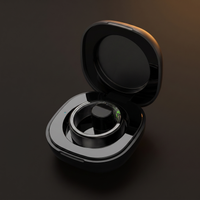
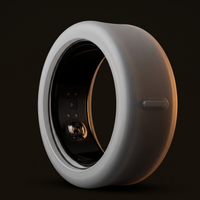
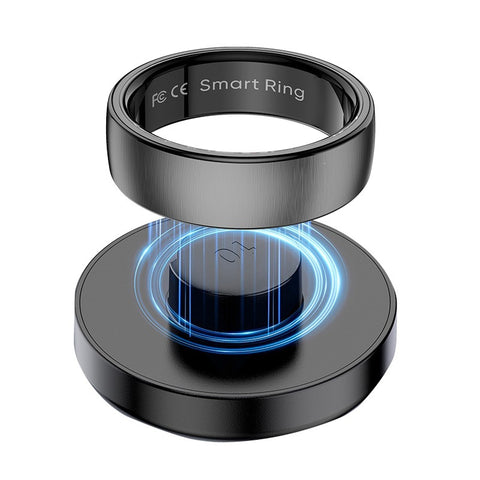
PulseRing Pro records when you fall asleep and wake, plus your sleep stages, heart rate and HRV every night. It learns your personal baseline over roughly two weeks. Each morning you get one readiness score and one plain call: push, maintain or rest. Its sleep estimates have not been independently validated, so watch the trend. It lasts up to 7 days per charge, so you rarely miss a night, and there is no subscription.
What if your schedule cannot be regular?
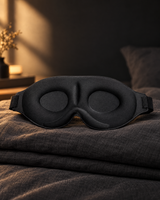
Shift workers, new parents and people who cross time zones cannot always keep fixed hours. The same principles still help. Keep your main sleep period as consistent as you can within each run of shifts. Protect it with a dark, quiet room. Use light deliberately: bright when you need to be alert, dim before sleep. If you have to sleep in daylight, blackout blinds or a contoured sleep mask can make the room darker.
Keep regular hours and still struggle to sleep, wake often or feel exhausted for weeks at a time? Speak to a doctor. Persistent insomnia can be treated. Doctors often offer cognitive behavioural therapy (CBT) rather than sleeping pills.
Frequently asked questions
Is it better to have a consistent wake time or a consistent bedtime?
Start with the wake time. It is easier to control with an alarm. Getting up at the same time each day, then getting daylight, helps anchor your body clock. Bedtime tends to settle once your wake time is steady. Go to bed when you feel sleepy, leaving room for at least 7 hours of sleep.
Is a lie-in at the weekend bad for you?
Not in itself. A 2023 expert panel agreed that catch-up sleep may help when you are short on sleep during the week. The problem is a long lie-in every weekend, which pushes your body clock later. Keeping weekend wake times within about an hour of weekdays is a sensible compromise.
How long does it take to fix an irregular sleep schedule?
There is no fixed timeline, and it depends on how irregular your sleep was to begin with. Body clocks shift gradually, so give a fixed wake time at least a couple of weeks. Morning light and dim evenings help it along. A wearable shows whether your times are really settling.
What is a good Sleep Regularity Index score?
There is no agreed target. The index runs from 0 to 100, where 100 is a perfectly repeated pattern. In the UK Biobank study of 60,977 adults, the median score was 81. Higher scores were linked with lower mortality risk. The useful comparison is with your own previous weeks.
Does sleep regularity matter more than sleep duration?
In one large UK study, regularity predicted mortality risk more strongly than duration did. That does not make duration unimportant. Adults still need enough sleep, and most guidance suggests 7 or more hours. Think of them as partners: a regular schedule makes it easier to get enough sleep consistently.
Sources
- Windred DP et al. Sleep regularity is a stronger predictor of mortality risk than sleep duration: a prospective cohort study, Sleep, 2024
- Sletten TL et al. The importance of sleep regularity: a consensus statement of the National Sleep Foundation sleep timing and variability panel, Sleep Health, 2023
- Phillips AJK et al. Irregular sleep/wake patterns are associated with poorer academic performance and delayed circadian and sleep/wake timing, Scientific Reports, 2017
- Wittmann M et al. Social jetlag: misalignment of biological and social time, Chronobiology International, 2006
- Depner CM et al. Ad libitum weekend recovery sleep fails to prevent metabolic dysregulation during a repeating pattern of insufficient sleep and weekend recovery sleep, Current Biology, 2019
- Insomnia, NHS
- AASM and SRS publish new sleep duration consensus statement, American Academy of Sleep Medicine, 2015
This article is for general information and is not medical advice. PulseRing Pro is a wellness device, not a medical device, and does not diagnose or treat any condition. If you are worried about your health, speak to your GP or a qualified clinician.

Winter sleep and mood: how light affects you and what really helps
How shorter days affect your body clock, sleep and mood, why Blue Monday is a marketing invention, and which winter habits and treatments have real evidence behind them.

How much REM sleep should you get a night? Normal amounts by age
How much REM sleep is normal at different ages, why alcohol and short nights cut it, how to get more, and how far to trust your tracker's REM figure.

Dry January benefits for sleep and HRV: what a month off does
What the Dry January research really found about sleep, what an alcohol-free month may show on a wearable, how to run it as a simple experiment, and who should not stop drinking...